
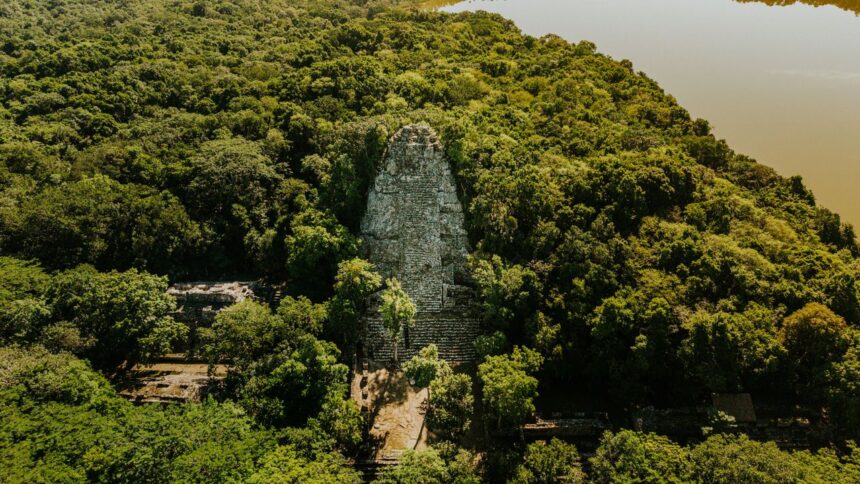
Somewhere beneath the thick jungle canopy in northern Guatemala lurked something massive. Hidden not beneath soil, but rather from underneath a verdant blanket of leaves so secretive, even the eyes of modern civilization glanced right over it for years. The jungle’s facade of ordinary hills and ridges had deceived everyone, concealing an entire lost city until this very moment.Buried beneath the rainforest was one of the largest Maya settlements ever known.
A sprawling metropolis of pyramids, palaces, highways, and defensive structures, unknown to anyone until recently.
Advancements in LiDAR (light detection and ranging) allowed archaeologists to announce back in 2024 the full scope of what’s now being referred to as the lost city of Valeriana. What they discovered didn’t just mark another ancient city on a map. It challenged our understanding of how big and booming the Maya civilization was during its peak.
A City the Size of a Modern Metropolis
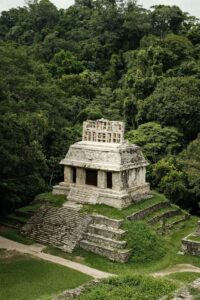
Researchers had suspected there were some Maya ruins deep in this region of the Mirador-Calakmul Karst Basin. Low population centers, some isolated structures. Nothing that hinted at grandeur. Until they received the LiDAR scans. Across nearly 650 square miles, hidden beneath centuries of jungle overgrowth, were more than 1,000 connected settlements. At the center: Valeriana. Once a city of more than 6,700 structures. Pyramids rose high above the forest canopy.
Ball courts for ritual games. Artificial reservoirs and elevated causeways link the urban grid together. Someone had engineered and maintained tens of thousands of people here. This wasn’t an anomaly. It was part of an enormous complex, far more urbanized than previously thought.
Why the Jungle Kept Its Secret
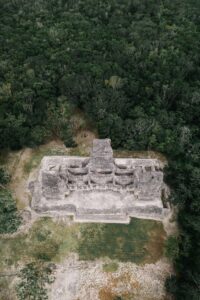
The Maya Rainforest is one of the hardest places in the world to conduct traditional archaeology. Large-scale ground surveys are near impossible due to the dense vegetation, steep terrain, poisonous snakes, and oppressive heat. Previous trips only ever managed to notice the trees and not the forest.
LiDAR changed everything. The researchers used millions of laser pulses shot down from aircraft flying over the canopy to produce extremely detailed images of the ground’s surface, in effect removing the trees and revealing man-made structures underneath. The rounded tops of the hills were really old pyramids and platforms. The apparently haphazard ridges were,e in fact, carefully constructed roads and the fortifications.
It wasn’t that the technology ‘found’ the city, it was that we were finally able to see what has always existed there.
What This Changes About the Maya
For many years, Classic Maya society (c. 250–900 AD) was viewed as a group of relatively autonomous city-states enclosed by sparsely populated forest. The Valeriana recoveries indicate something far more complicated: an extremely populated, densified area, in which cities were merging across the landscape.
The finding demonstrates advanced engineering, extensive water management, agricultural terraces, and monumental architecture that required a high level of organization and manpower. It also poses new questions surrounding the rise, success, and eventual collapse of these societies around the 9th century.
This wasn’t a primitive jungle civilization. It was a very sophisticated urban culture that had an impact on the environment as great as that of any ancient empire.
The Past Still Hiding in the Trees
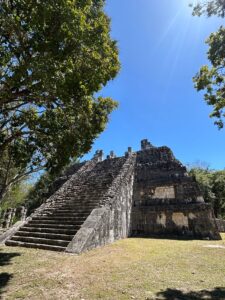
It’s a very interesting movement story. There was a city there, sleeping for over a thousand years, and its pyramids were draped in moss, its plazas were quiet but for the howler monkeys. Maya descendants lived nearby, and the rest of the world had no idea of the magnitude of the achievements of their ancestors.
The LiDAR revolution is in its early stages. But scientists say there are many more secrets to be discovered there. The once-underused rainforest could one day become one of the marvelous urban landscapes of antiquity.
History is a great teacher because it reminds us of what we don’t know. Sometimes the best discoveries come from taking a fresh look, not looking deeper. And now, the Maya jungle whispers that there’s more to tell.