

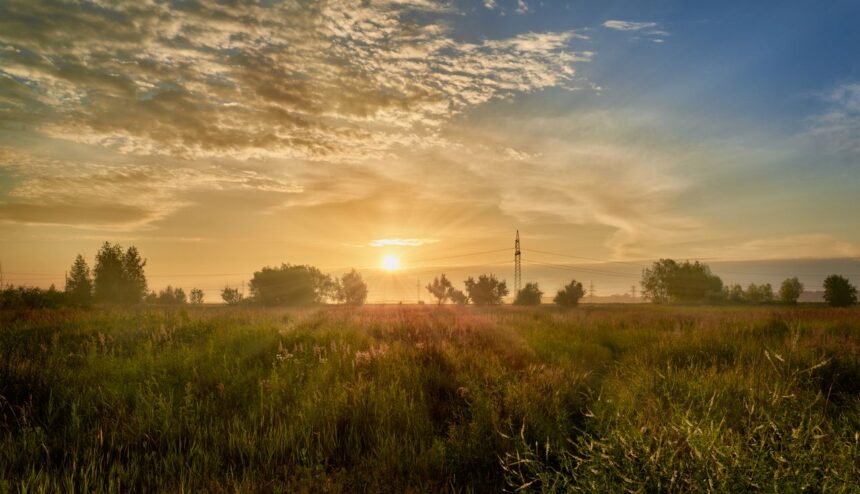
The summer solstice arrives in late June 2026, in the early morning hours EDT, and millions of people will mark it as the day the sun does the most. The longest day. Peak light. The turning point of summer. And in one important sense, they’re right. But here’s the strange part: by June 21, the earliest sunrise of the year has already come and gone.
In 2026, the sun rises at its earliest in the days leading up to the solstice, typically around mid-June for mid-latitude Northern Hemisphere locations. Most of us missed it entirely. The alarm went off at the usual hour, we poured our coffee, and the sun had been up longer than we realized. And the latest sunset? That won’t happen until late June, typically a week or so after the solstice for mid-latitude Northern Hemisphere locations, nearly a week after the solstice.

The longest day sits in the middle of a six-week window that doesn’t line up the way our instincts tell us it should. This isn’t a regional quirk. It isn’t about your time zone or your latitude. It’s a product of the way Earth actually moves, and once you understand it, the whole calendar starts to look slightly different.
The explanation has a name that sounds more mysterious than it is: the equation of time. In short, a solar day, the time it takes the sun to return to the same position in the sky, is not exactly 24 hours. In June, those solar days run a little longer than our clocks suggest. The reason is Earth’s elliptical orbit. Our planet doesn’t travel around the sun in a perfect circle.
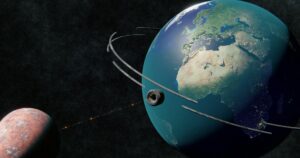
It speeds up slightly when it passes closer to the sun and slows when it pulls away. In early summer, Earth is actually near its farthest point from the sun, moving a little more slowly through space. That small variation in orbital speed means the solar noon, the moment the sun peaks overhead, drifts a few minutes later each day in June. The result is that both sunrise and sunset shift progressively later as June goes on. The solstice marks the moment of maximum daylight, but because the whole solar day is running long, that maximum gets spread unevenly across the calendar.
The earliest sunrise slips in a week or two before the solstice. The latest sunset creeps in a week or so after. For most of us, the practical effect is small. A few minutes here or there. But the feeling it produces is real. We look out the window in late June, a week past the solstice, and the evening light is still going. It should be shortening by now. It doesn’t feel like it is. That’s not imagination. That’s the equation of time.
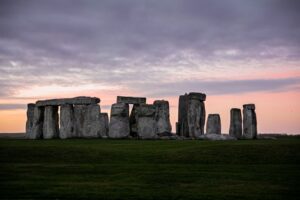
In the early morning hours EDT on the solstice date, the sun will stand directly over the Tropic of Cancer. That’s the moment, not the day, the moment, when Earth’s axial tilt reaches its maximum lean toward the sun in the Northern Hemisphere. From that point forward, noon sunlight over the Northern Hemisphere will start to arrive at a slightly lower angle. Days will technically begin shortening. But because of the equation of time, you won’t feel it in the mornings or evenings for a while.
The sun will keep setting later for another week. The transition is real but gradual, unfolding across days most of us experience as simply summer. There’s something almost human about the way the calendar handles this. The solstice is the turning point in every technical sense. And yet the light keeps coming, just a little past when it’s supposed to stop. In some parts of the world, the June solstice isn’t just an astronomical data point. It’s a lived atmospheric condition. In St. Petersburg, Russia, twilight lasts through the entire night around the solstice.
The sky never fully darkens. The city has a name for it, white nights, and for a few weeks each June, the local culture reorganizes itself around the absence of dark. Theaters run late. People walk along the Neva River at midnight in something that looks like dusk. Even London, which sits well south of St. Petersburg, never reaches full astronomical darkness on June 21. Civil twilight gives way to nautical twilight, but the sky stays a deep blue-grey rather than true black. For anyone who has grown up with proper summer nights, the kind where you can see the Milky Way, standing outside in London at midnight in June is a genuinely disorienting experience.
Sources
This article was researched, written, and edited by our human editorial team. AI tools were used in a limited research-assistant capacity. All claims were independently verified.