



Of the roughly 8 billion people alive today, somewhere around 7.2 billion will reach for a glass with their right hand. They’ll sign their name, throw a ball, and point at things with the same side. Across every culture on earth from rural fishing villages in Indonesia to apartment towers in São Paulo the number holds: about 85, 90% of us are right-handed.
No other primate species comes close to that kind of consistency.
Scientists have been puzzling over that number for a long time. The leading theories have shifted over the decades, language dominance in the left brain, genetic inheritance, cultural reinforcement, tool use, and none of them ever quite explained why the preference runs so deep, or why it’s so universal. Then, in April 2026, researchers at a leading UK university published a study in a peer-reviewed biology journal that tested all the major competing hypotheses at once. The answer they found wasn’t in the brain’s language centers, and it wasn’t in the genes that code for motor skills.
It was in the legs.
The study that changed the question
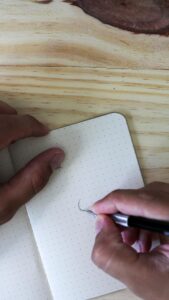
The Oxford team looked at handedness across dozens of primate species using behavioral data from more than 2,000 individual animals. That’s a large enough sample to say something real, not a handful of chimps in one enclosure, but a genuine cross-species comparison. What they were looking for was a pattern: which physical traits predict whether a species develops a strong, consistent hand preference at the population level?
Two things kept showing up. Brain size. And the ratio of arm length to leg length, a reliable biological marker for how much a species relies on walking upright versus climbing on all fours.
Here’s the strange part. When you add just those two variables to the model, humans stop being an outlier. For most of evolutionary history, the story about right-handedness has been “why are we so different from every other animal?” The Oxford study reframes it. We’re not different. We’re just the species that walked farthest in one direction, and our brains grew to match.
The logic goes something like this. Walking upright on two legs frees the arms from weight-bearing duty. The hands become tools rather than supports. Once that happens, the brain, which in humans is substantially larger, relative to body size, than in any other primate, starts specializing. The left hemisphere, which controls the right side of the body, takes on more of the fine motor work. The right hand becomes the dominant one. Not because of a single gene or a language quirk, but because of a long cascade of changes that started the moment our ancestors stood up.
The Hobbit and what it tells us

One of the more quietly remarkable pieces of the Oxford study is what it predicts about Homo floresiensis, the small-brained hominin discovered in Indonesia that paleoanthropologists have nicknamed “the hobbit.” With its relatively small brain and partial climbing adaptations, the floresiensis body plan sits somewhere between a modern human and an earlier primate ancestor. According to the Oxford model, that would predict a much a weaker right-hand bias than modern Homo sapiens, a prediction generated by the model, not a direct excavation finding.
That’s the kind of prediction a good model makes, not just explaining what we already know, but forecasting what we’d expect to find in cases we haven’t fully studied yet. It turns a theory into something testable.
And it quietly closes the door on some older explanations. Language processing, for instance, has long been a popular candidate, since speech is largely controlled by the left hemisphere in most people. But the Oxford data suggests language isn’t the driver, it may be more of a passenger. The structural changes that came with upright walking and brain expansion seem to have come first. Language, and the lateralization that comes with it, followed.
What this means for the 10% who aren’t right-handed

Left-handers have heard their share of theories too. Left-handedness runs in families, which suggests genetics plays some role. Twin studies have complicated that picture considerably, identical twins often have opposite hand preferences, which points to developmental factors beyond DNA.
The Oxford model doesn’t erase those questions. What it does is establish a baseline: the evolutionary pressure ran strongly toward right-handedness, and it ran that way because of bipedalism and brain growth, not because of any single gene switch. Left-handedness, on this account, isn’t a defect or a rare mutation. It’s the tail of a distribution, the natural variation that exists whenever a trait is under strong but not absolute selective pressure.
There’s something almost reassuring about that. Ten percent of the human population has been left-handed for as long as we have records of handedness, which goes back at least to cave paintings and ancient tool deposits. That consistency, across every culture and every era, suggests left-handedness isn’t being selected against. It just isn’t the modal outcome of the evolutionary path we walked.
How strange it is to remember, reaching for anything at all, that the motion goes back that far.
<h3>Sources</h3>
<ul class=”article-sources”>
<li><a href=”https://journals.plos.org/plosbiology/article?id=10.1371/journal.pbio.3003771″ rel=”noopener noreferrer”>PLOS Biology. University of Oxford handedness study (April 2026)</a>, Primary research source; cross-species analysis of handedness across 41 primate species</li>
</ul>
This article was researched, written, and edited by our human editorial team. AI tools were used in a limited research-assistant capacity. All claims were independently verified.