


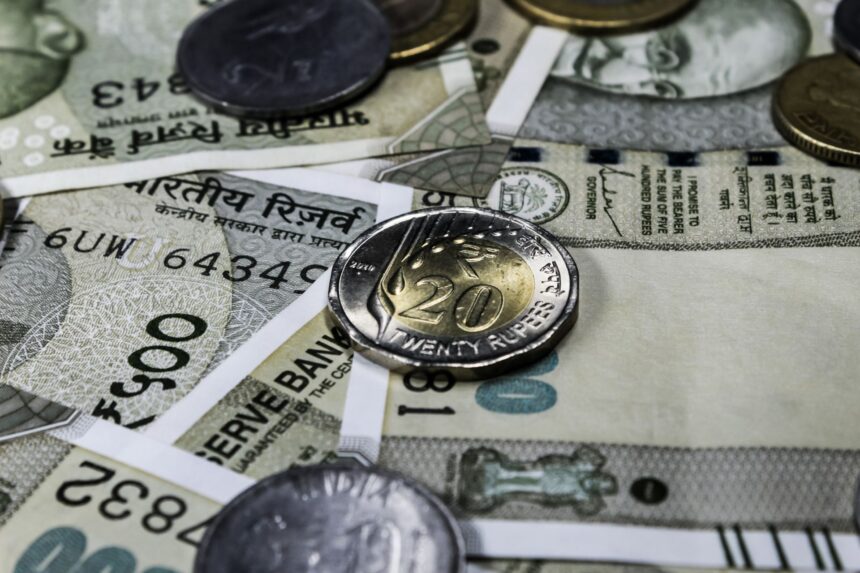
There is a particular kind of financial revolution that arrives without fanfare. No speeches. No front pages. Just a regulatory document dense, technical, easy to miss, that quietly rewrites the rules of what counts as money.
That is what happened in early 2026, when the Reserve Bank of India issued new lending guidelines formally allowing silver to serve as collateral for bank loans and loans through non-banking financial companies.
Under the new framework, borrowers can pledge up to 10 kilograms of silver in exchange for loans of up to ₹2.5 lakh, roughly $2,900, $3,100 USD at prevailing exchange rates. For comparison, the gold collateral limit sits at 1 kilogram.
A 10-to-1 ratio. Silver to gold. In a world where the market prices silver at somewhere between 60 and 90 times cheaper than gold at the time of writing, that number is not just a lending rule. It is a statement.
The Weight of What Was Sitting Still

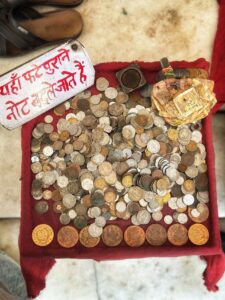
For generations, silver in India has not really been silver in any financial sense. It has been furniture. Heirlooms. Wedding gifts passed from grandmother to daughter, stacked in chests, displayed in temple alcoves, quietly accumulating dust in rural homes that may have no bank account at all. Economists have a phrase for wealth like this: dead capital. It exists. It has value. But it cannot be moved, cannot be borrowed against, cannot seed a small business or pay a hospital bill, without being surrendered entirely.
India’s household silver holdings are estimated by some industry analysts at somewhere between 10,000 and 15,000 tonnes, making the country one of the largest repositories of privately held monetary metal on earth. That is not a small number. To put it in context: the entire annual global silver mine output runs around 25,000 tonnes or more in recent years. India’s dormant household stockpile represents more than half a year of what the entire planet digs out of the ground.
Until April 2026, almost none of that silver worked for the people who owned it. Now, at least in theory, a farming family in Rajasthan or a small trader in Tamil Nadu can walk into a bank or a lending institution and pledge their silver without selling it. The metal stays in the family. The loan comes through. The capital moves.
That is the quiet revolution buried inside the RBI’s lending guidelines.
A Century of Monetary Forgetting

Silver’s fall from monetary relevance was not sudden. It was a long, slow institutional forgetting, one country at a time, one decade at a time, across the better part of a hundred years.
The 19th century ran partly on silver. The United States had its famous bimetallism debates, the Populist movement of the 1890s, the “Cross of Gold” speech, Wand illiam Jennings Bryan arguing that farming communities were being crushed by a gold standard that left them cash-poor. India, under British colonial rule, operated a silver rupee standard that connected hundreds of millions of people to a monetary metal they could touch and trust.
By the time the Bretton Woods system locked the postwar world into a dollar-gold framework in 1944, silver had been quietly shown the door.
And here is the strange part: nobody really voted on it. No referendum, no national debate. The metal simply stopped being part of the official system, one regulation at a time, until a generation arrived that had never thought of silver as money at all.
The RBI’s April 2026 guidelines do not put silver back on a formal monetary standard. Let’s be clear about that. India has not pegged the rupee to silver, and there is no suggestion it intends to. But what the guidelines do, and this is the part worth sitting with, is formally embed silver into the lending infrastructure of a major economy.
Banks must now accept it. Valuations must follow a process. The metal has, in a narrow but real sense, re-entered the financial system.
What the Collateral Ratio Actually Means

Numbers matter here, and this one matters more than it first appears.
The RBI allows 10 kilograms of silver to serve as collateral, whereas only 1 kilogram of gold can. On paper, that looks like a practical accommodation. Silver is cheaper, so you need more of it for the same loan value. Fine. Sensible.
But the implicit ratio embedded in that rule, 10:1, silver to gold, diverges sharply from where the market actually prices the two metals. At a prevailing gold-silver ratio of roughly 70 to 90:1 at the time of writing, the RBI’s framework effectively treats silver as nearly six times more valuable, in lending terms, than the open market does.
That gap could mean several things. It could be a policy choice to benefit rural borrowers who hold silver rather than gold. It could reflect a bet, or at least an institutional acknowledgment, that silver is undervalued relative to its monetary history. Or it could simply be a practical lending decision that carries no deeper signal at all.
India is also among the world’s largest gold consumers, typically ranking first or second globally, and its appetite for gold imports has been growing. Average monthly gold imports rose significantly in early 2026 compared to the prior year, according to industry data. A country hungry for gold typically does not look to silver as an alternative. And yet here the RBI is, formalizing silver’s role in lending while gold imports climb. Both things are true at once.
The Question That Follows the Policy
There is a version of this story that ends with a modest regulatory update and no further consequence. A lending tweak that helps rural families access credit. A quiet improvement to financial inclusion. Important, yes. World-altering, no.
But there is another version.
If the world’s most silver-rich nation, a country of 1.4 billion people with an estimated 10,000 to 15,000 tonnes of the metal sitting in homes and temples, formally treats silver as monetary collateral, that is a data point. Not a revolution on its own. But a data point that other central banks will notice, that commodity analysts are already beginning to model, and that millions of ordinary Indian families will feel in ways that have nothing to do with macroeconomic theory.
For a farmer in Madhya Pradesh who inherited a set of silver vessels from her mother, the RBI’s new rules mean something specific and immediate: she can borrow against what she already owns, without losing it. The silver stays. The loan arrives. The dead capital breathes.
How strange it is to realize that what looks like a forward-looking financial innovation is really just an old idea, dusted off, the same logic that underpinned the silver rupee for centuries, now wearing a modern regulatory coat.
Whether other economies are watching closely enough to follow is the question that monetary historians may spend the next decade answering.
This article was researched, written, and edited by our human editorial team. AI tools were used in a limited research-assistant capacity. All claims were independently verified.
Sources:
India just pulled the world’s largest Silver bid
REMONETIZATION OF SILVER IN INDIA: A HISTORICAL TURNING POINT