

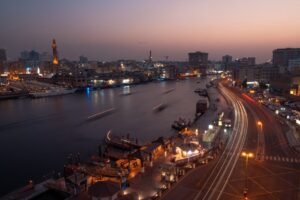
There is a creek in Dubai that merchants have used to move gold since before anyone in London thought to look south. In the 1940s and 1950s, small wooden dhows worked the waters of Dubai Creek at night, carrying gold bars from the Persian Gulf toward the Indian coast. The trade was technically illegal in India at the time. Nobody stopped it for long.
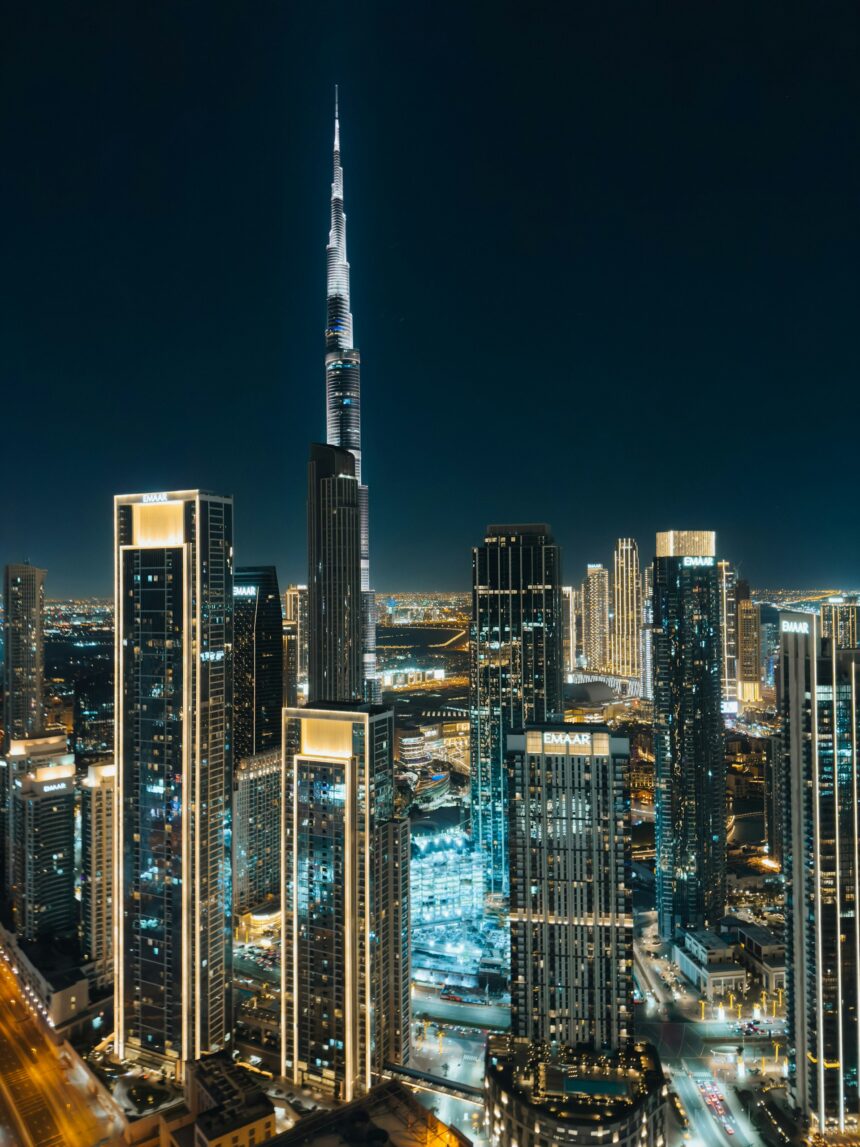
In early 2026, Dubai officially launched the Dubai Gold District, a purpose-built commercial zone that includes a planned Gold Street featuring gold-incorporated design elements. The announcement was covered by Bernama and The Business Standard, citing the Dubai Media Office directly. It was the kind of ribbon-cutting that tends to get framed as a novelty. It is not a novelty. It is the logical endpoint of an eight-decade economic story that most financial histories still leave out.
And here’s the part most people miss: Dubai didn’t become a gold hub because of oil wealth or government planning alone. It became one because of geography, old trade networks, and a tolerance for moving money through channels that wealthier cities preferred to ignore.
From Pearl Diving to Re-Export Hub

Before oil, Dubai was a pearl-diving town. The industry supported most of the Gulf coast economy until Japanese cultured pearls collapsed the market in the 1930s. What the pearl trade left behind was something more durable: a merchant class comfortable with long-distance commerce, and a creek that already handled goods moving between India, Iran, and East Africa.
Gold fit naturally into that network. India restricted gold imports for decades, which created a price gap between the official market and what people in Bombay — now Mumbai, would actually pay. Dubai’s merchants, many of them Indian and Iranian traders who had operated in the Gulf for generations, understood that gap as a business opportunity. By the 1950s, gold smuggling routes from Dubai to India were well-established. The dhows that had once carried pearls now carried bullion.
The British, who administered the Trucial States of which Dubai was a part, were aware of the trade. Their response was measured. Dubai’s ruler at the time, Sheikh Rashid bin Saeed Al Maktoum, understood that restricting the merchants would simply move the trade elsewhere. The creek stayed open.
The Infrastructure That Made It Official
Source: Unsplash
Informal trade can sustain a city for a generation. Turning it into a global market requires something else: rules, institutions, warehousing, and the kind of paperwork that banks accept.
Dubai began building that infrastructure deliberately after the UAE’s formation in 1971. The Gold Souk, which still operates in the Deira district, became one of the most concentrated retail gold markets anywhere in the world. By the time the Dubai Multi Commodities Centre was established in 2002, the city already had the trade flows to justify it. The DMCC is home to thousands of member businesses, and it operates the framework through which much of the world’s gold gets certified, stored, and traded.
The numbers since then have become hard to argue with. The UAE exported tens of billions of dollars worth of gold annually, making it the world’s second-largest physical gold trading hub, making it the world’s second-largest physical gold trading hub. Its biggest trading partners included major gold trading nations such as Switzerland, India, and the UK, among others. Dubai now handles a substantial share of the world’s physical gold trade. That is not a boutique market. That is a structural fact about how gold moves on Earth.
The Gold District, which opened in early 2026, brings hundreds of retailers under a single planned zone. In 2025 alone, shoppers from scores of nationalities visited. How strange it is to remember that this all began with dhows slipping out of a creek at night.
Why London Is Paying Attention
For most of the twentieth century, the London Bullion Market Association set the global price of gold twice a day in a process that dated to 1919. The “London fix” was simply how the gold market worked. The assumption built into that system was that physical gold trading happened in London, or at least cleared through it.
That assumption has been eroding. The shift isn’t sudden. It has been built through the same decades that Dubai was constructing its infrastructure. Switzerland has long been the world’s largest gold refining center. China’s Shanghai Gold Exchange has grown into a major force. And Dubai sits between all of them, geographically and commercially, as a re-export hub for physical metal heading toward Asia and Africa.
The UK still appears on Dubai’s list of major gold trading partners. But appearing on someone else’s list is a different thing from setting the terms. The merchant class that ran dhows through Dubai Creek in the 1950s would probably recognize the dynamic.
The Street That Tells the Story
Gold Street is partly marketing. That should be said plainly. A street built with gold in a district purpose-designed for retail is, among other things, a tourism draw for a city that understands how to attract visitors. The Gold District welcomed people from 147 nationalities in a single year. Dubai knows what it is doing.
But underneath the spectacle is something real. The city did not invent its gold economy in 2026. It formalized one that had been running for eighty years, through periods when it was unofficial and occasionally illegal, through the oil booms that gave it capital, through the institution-building of the 1990s and 2000s, and into a present where it exports more than fifty billion dollars’ worth of the metal in a single fiscal year.
The dhows are gone from the creek at night. The gold still moves.
This article was researched, written, and edited by our human editorial team. AI tools were used in a limited research-assistant capacity. All claims were independently verified.