

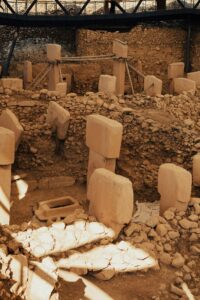
There is an animal cemetery on the edge of the Egyptian desert, right where the Red Sea port of Berenike once hummed with trade ships, that has been quietly upending Roman history since archaeologists first broke ground there in recent years. Hundreds of animal burials have surfaced at the site. Most were cats and dogs, the usual companions of a busy port town. But tucked among them were dozens of monkeys that had no business being in Egypt at all.
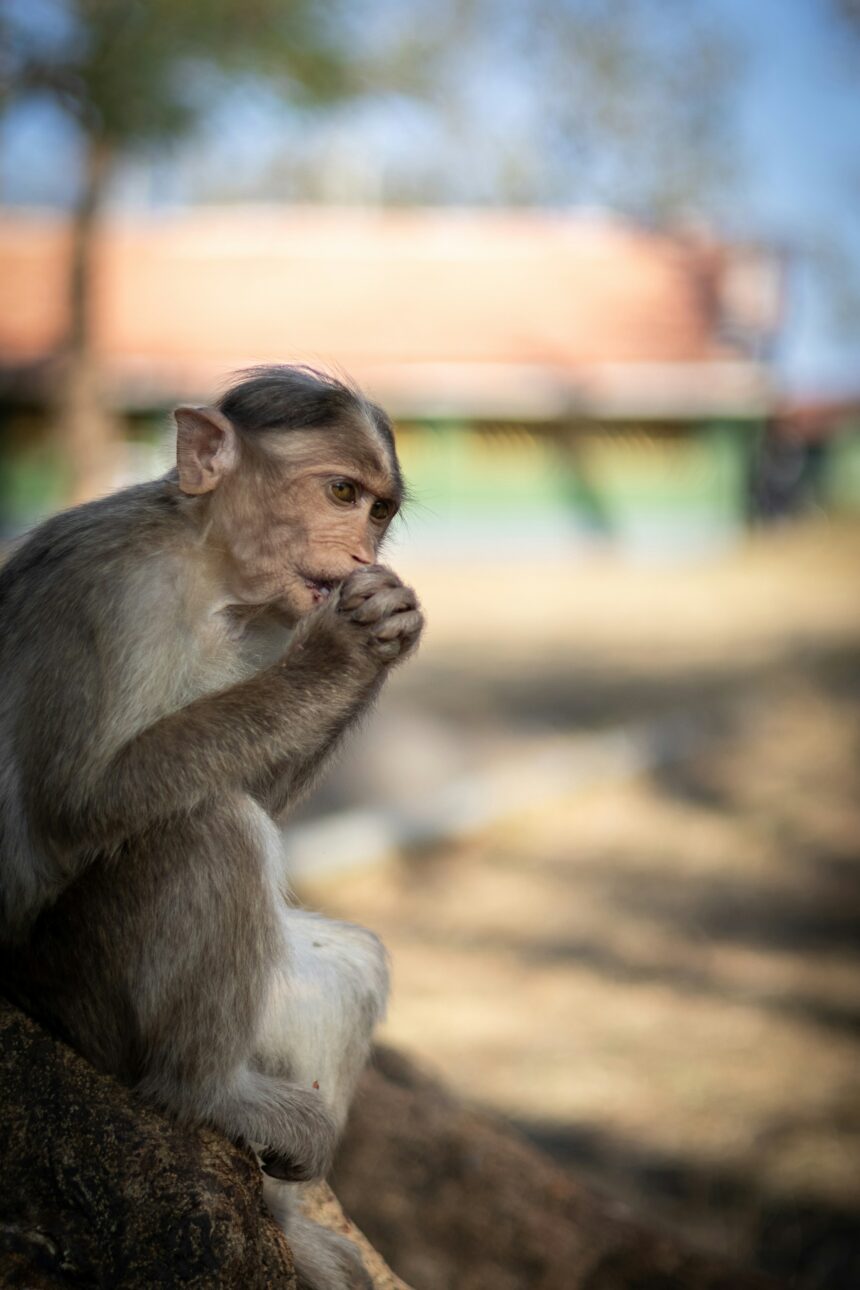
They were rhesus macaques and bonnet macaques, both native to southern India and the Indus Valley, not Africa, not the Mediterranean, not anywhere in the Roman Empire’s ordinary reach. Analysis published in a peer-reviewed archaeological journal and featured in a recent issue of Archaeology Magazine confirmed what researchers had long suspected:
These animals were imported live, shipped across the Indian Ocean on the same trade routes that carried spices and silk, and kept as pets by Roman military officers stationed at the far edge of the empire.
It is hard to fully picture what that journey looked like. A live macaque, probably young and frightened, was loaded onto a vessel at a port on India’s western coast, crossing open ocean to reach the Red Sea, then overland to Berenike. Weeks, possibly longer. The Roman officers who ordered them apparently wanted something India had, and Egypt could not replicate. A creature from somewhere else entirely. A signal, visible to anyone who looked, that the man who owned it had reached.
What the Graves Reveal About Roman Status
Here is the strange part. The monkeys weren’t just kept, they were mourned. A substantial proportion of the monkey graves at Berenike contained grave goods: collars, iridescent shells, and food offerings. Compare that to a far smaller share of the cat and dog burials at the same site. The animals that traveled the farthest received the most careful send-offs. That gap is not subtle. It tells you something about how their owners valued them, not merely as curiosities, but as companions worth honoring.
One skeleton in particular stops you. A monkey dated to the Roman period was buried alongside a piglet, two large sea shells, a woven basket, and a piece of folded cloth among its burial goods. The piglet alone raises questions no one has fully answered. Was it a food offering, or a companion? Did the monkey have something like a pet of its own? The image that forms is unexpectedly tender, an animal, already displaced from its home continent, given something soft to take into the ground.
A Diet That No One Could Solve
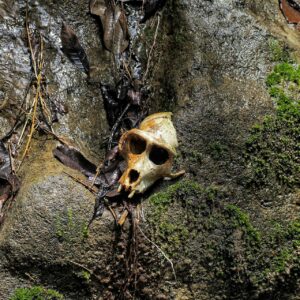
The bones told another story, quieter and sadder. The monkeys’ skeletal remains show signs consistent with dietary stress, suggesting their owners struggled to replicate an Indian diet in the Egyptian desert. Rhesus and bonnet macaques eat fruits, seeds, insects, and plant material that the port town of Berenike simply couldn’t supply in the right combination.
The officers who imported these animals as proof of wealth and connection couldn’t quite follow through on the practical side of keeping them healthy. They had the status symbol. They didn’t have the mangoes.
That detail lands differently once you sit with it. These were men of the Roman military class, posted to a dusty Red Sea garrison, presiding over one of the empire’s most lucrative trade corridors. They had access to goods flowing in from Arabia, East Africa, and India on a regular basis. And still, the monkeys were malnourished. Which tells you something about the distance between wanting a thing and truly being able to sustain it, a problem, it turns out, that is not confined to the ancient world.
The Trade Route That Made It Possible

Berenike itself deserves a moment. It was one of the Roman Empire’s most important Indian Ocean ports, a place where Roman merchants and officers met goods, ideas, and animals coming off ships from the subcontinent. The route from India to the Red Sea was well-established by the 1st century CE, supported by seasonal monsoon winds that made the crossing predictable enough to build a commercial empire around. Pepper, cotton, ivory, and precious stones moved through Berenike regularly. So, apparently, did live macaques.
What the new analysis adds is not just the fact of their presence. Roman writers had occasionally mentioned exotic animals from the East, but the scale and organization of it. Thirty-five individual monkeys, buried over what appears to be a sustained period, suggest multiple importation events over time. This was not one eccentric officer’s impulse. It was, by any reasonable reading of the evidence, a small but deliberate trade in living status symbols, conducted at enormous logistical cost, by men who wanted something their colleagues back in Rome might never see up close.
What the Cloth Might Mean
Return, for a moment, to that folded cloth in the first-century burial. Researchers noted the presence of a folded cloth among the burial goods. That is a careful, measured observation from people who spend their careers avoiding overstatement. And it is still a remarkable thing to say about an animal burial from two thousand years ago.
We know very little about how Romans understood the inner lives of animals. We know they kept them, trained them, displayed them, and in some cases clearly grew attached to them. What we don’t know, what the cloth only hints at, is whether the officer who buried this particular monkey understood it as a creature that had lost something by being taken so far from home. Whether the cloth was comfort, ceremony, or simply habit. Whether it was placed there with grief or with ritual or with both.
The cemetery at Berenike is still being excavated. Nearly 800 burials have been recovered over roughly fifteen years, and the site is not finished. Whatever else is down there, it has already produced one of the more quietly astonishing portraits of Roman life at the empire’s edges: soldiers far from Italy, surrounded by animals that crossed an ocean to reach them, burying those animals with more care than they showed their cats and dogs.
The monkeys never made it back to India. But someone made sure they didn’t leave empty-handed.
This article was researched, written, and edited by our human editorial team. AI tools were used in a limited research-assistant capacity. All claims were independently verified.