


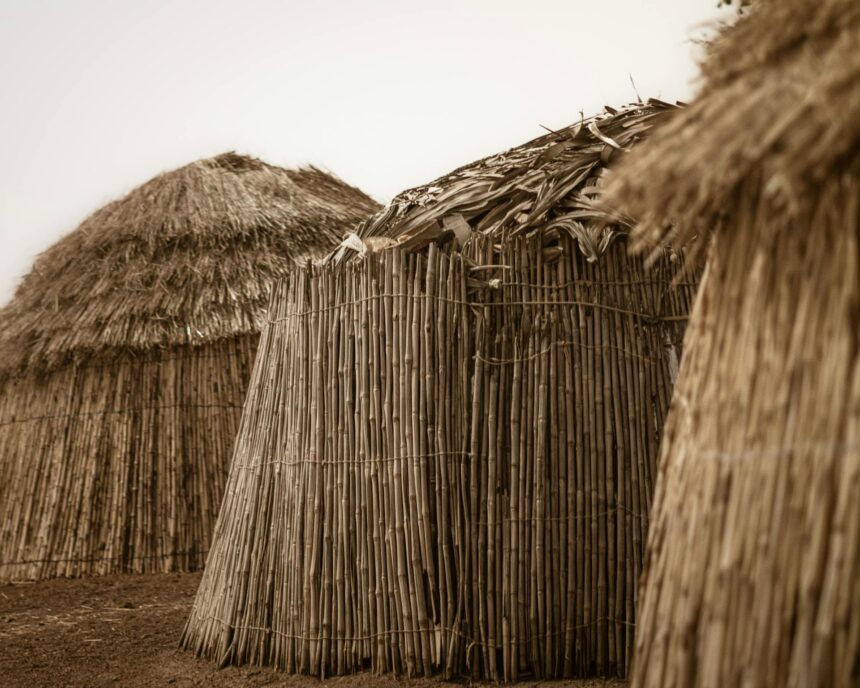
In the Falémé River valley of eastern Senegal, the ground holds an estimated tonnage of slag described by researchers as exceptionally large amounts of iron slag. Not scattered across a broad landscape, not the remnants of a dozen separate sites. All of it concentrated in one place, at a workshop called a site known as Didé West 1, a site that operated continuously for nearly 800 years.
That number keeps stopping researchers cold. Most iron-smelting sites from the same era were active for a generation, maybe two, before the community moved on or the fuel ran out. Didé West 1 kept going for what researchers describe as roughly eight centuries, spanning from the pre-Common Era through the early first millennium CE. Eight centuries of fire, slag, and iron. The Falémé Valley ironworkers who built it were still tending its furnaces when Rome was falling apart.
A study published in early 2026 in a peer-reviewed African archaeology journal by a European-led research team has now put that site at the center of a much larger argument, one that touches on whether sub-Saharan Africa developed ironworking on its own, independent of Europe and the Middle East, or received that knowledge from somewhere else. The evidence from Didé West 1 is starting to tilt the answer in a direction that changes the story significantly.
The Workshop That Shouldn’t Have Lasted This Long
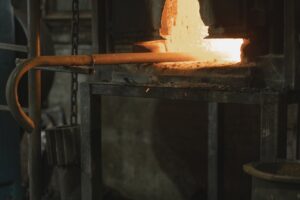
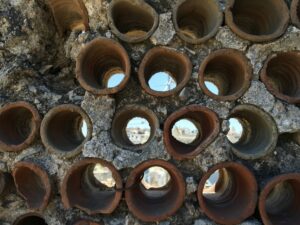
The physical remains at the site are extraordinary in their density. Archaeologists documented dozens of circular furnace bases arranged across the workshop, along with a substantial number of used clay tuyères, the ceramic tubes used to force air into a furnace during smelting, positioned in a semicircle. The scale of the slag deposit alone, roughly 100 tons, tells you this was not a small operation serving one village. It was a production center. Something closer to industrial, by the standards of 400 BCE.
But the quantity matters less than the design. The workshop used what researchers have called what researchers have designated a distinct local smelting tradition: small circular furnaces built with removable chimneys, paired with large clay tuyères that had multiple lateral perforations running through them. Those perforations weren’t decoration.
They were a deliberate engineering choice, distributing airflow through the furnace in a way that earlier and simpler designs couldn’t achieve. More even heat. More control over the smelting process. A more consistent iron output.
And here’s the thing: that particular design had never been documented in West Africa before this study. Not a variation of it. Not a precursor. It appears at Didé West 1 as a developed, functioning system, suggesting that the people who built it had worked out these technical refinements over time, likely through generations of accumulated local knowledge.
The Palm Nut Detail That Nobody Expected
Of everything the University of Geneva team found at the site, the palm nut seeds may be the most quietly significant. Packed into the base of the furnaces as a structural and thermal material, they represent a practice that has no close parallel yet identified in the documented West African archaeological record. Palm nut seeds are available, cheap, and apparently effective. The ironworkers at Didé West 1 had looked at what their landscape offered them and figured out how to use it.
That kind of local improvisation is exactly what independent technological development looks like. Not a borrowed technique arriving from the Levant or North Africa and spreading southward through trade networks. Something that grew from the specific conditions of the Falémé Valley: its forests, its riverine resources, the materials at hand.
The question of whether African ironworking developed independently has been argued for decades. Some researchers have pointed to early iron-smelting evidence in sub-Saharan Africa that predates or parallels what appears in the Middle East and Mediterranean world, suggesting the technology may have multiple independent origins.
Others have favored models in which ironworking knowledge spread outward from a single point of origin in the ancient Near East. Didé West 1 doesn’t resolve that debate with a single excavation report. But it adds weight to one side of the scale. A workshop this sophisticated, this distinctive in its methods, this deeply local in its material choices, is not the portrait of a society that received metallurgy as a gift from somewhere else.
Eight Centuries Is a Long Time to Keep the Fire Going
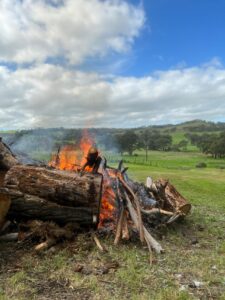
The longevity of Didé West 1 deserves its own pause. We tend to think of ancient industrial sites as temporary, places where a resource gets extracted until it runs out, then abandoned. Didé West 1 kept operating through the entire arc of the Roman Republic and Empire, from roughly the era of the early Roman Republic to the period of Late Antiquity. The Falémé Valley ironworkers were still smelting when the Visigoths sacked Rome.
That continuity implies something more than just a good ore deposit. It implies a community organized around the workshop, a transmission of technical knowledge across generations, and a social structure capable of maintaining a specialized craft for centuries. Ironworking at this scale and duration doesn’t happen by accident. It happens because a society decided that this was worth sustaining, worth teaching, worth protecting as a core part of its identity and economy.
How strange it is to sit with that image now, 35 furnace bases in the Senegalese ground, each one a circle in the earth where someone once stood in firelight, adjusting a tuyère, watching the slag run. Eight hundred years of that. And we are only beginning to read what they left behind.
What the Slag Heap Actually Tells Us

A hundred tons of slag is an archive. Each ton represents an act of smelting, a decision about fuel and ore and airflow, a moment when knowledge was applied and iron was made. The FAL02 tradition recorded at Didé West 1, its removable chimneys, its perforated tuyères, its palm-nut packing, is a fingerprint of a specific technical culture, one that developed in the Falémé Valley and, according to the research published in African Archaeological Review, had no close parallel in the broader West African record.
That matters for how we write the larger story of human technological development. The standard account, still taught in many survey courses, treats iron metallurgy as a technology that radiated outward from its origins in Anatolia and the Levant around 1200 BCE, spreading gradually through trade and migration.
Under that model, sub-Saharan African ironworking is a downstream chapter, a recipient tradition. What sites like Didé West 1 suggest is that the map of innovation was more complicated and more interesting than that.
The research team’s 2026 study is not a final verdict. Archaeology rarely delivers those. But it is the kind of evidence that makes previous certainties harder to hold. A workshop running for 800 years, using a furnace design no one had seen before, packing its fires with palm seeds in a technique found nowhere else, that is a tradition with its own logic, its own lineage, its own story.
The question of who taught the world to smelt iron may have a more complicated answer than the textbooks have been giving us.
This article was researched, written, and edited by our human editorial team. AI tools were used in a limited research-assistant capacity. All claims were independently verified.