


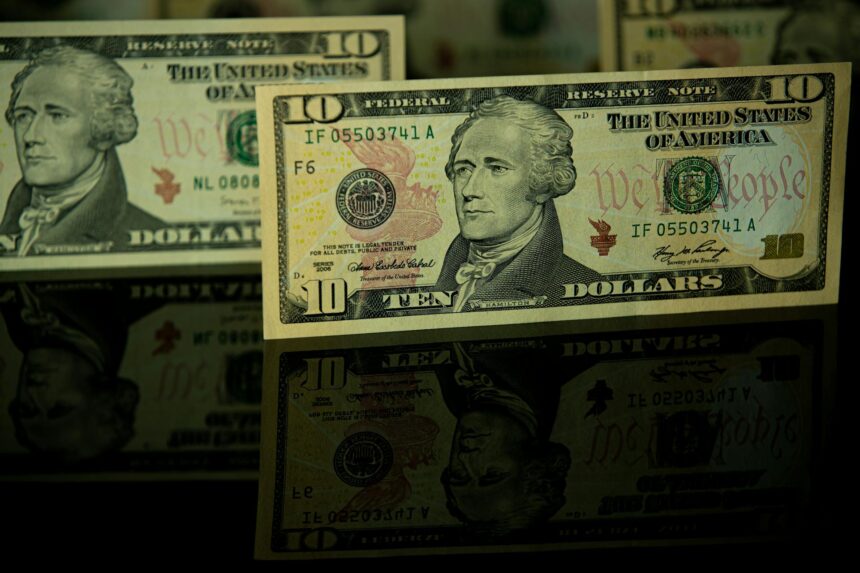
In the spring of 1862, the U.S. Treasury printed the first legal-tender paper money in American history. They were called greenbacks, and banks hated them. Not because the money was worthless, it wasn’t, but because it competed directly with the bank notes those same institutions had been issuing for decades. Congress had, without fully meaning to, created a new form of dollar that threatened the old one.
On July 18, 2025, President Biden signed the GENIUS Act (P.L. 119-27) into law. The legislation created the first comprehensive federal framework for dollar-backed payment stablecoins, digital tokens pegged one-to-one to the U.S. dollar, overseen by the Office of the Comptroller of the Currency. On March 2, 2026, the OCC published its proposed rules in the Federal Register, opening a 60-day comment period. Banks and crypto firms immediately started arguing. The argument, if you strip away the technical language, sounds a lot like 1862.
The Number That’s Making Banks Nervous

Stablecoins outstanding stood at roughly $281 billion in March 2026. That’s real money, but it’s still a rounding error next to the U.S. banking system. What worries bank executives is the trajectory. According to a March 6, 202,6 report from the Congressional Research Service, Citigroup research projects stablecoin growth to somewhere between $0.5 trillion and $3.7 trillion by 2030, and that expansion could displace between $182 billion and $908 billion in traditional bank deposits. A Treasury advisory council put a finer point on it: $6.6 trillion in U.S. transactional bank deposits is currently “at risk” from stablecoin competition.
And here’s the strange part. The risk isn’t that stablecoins will fail. It’s that they’ll succeed.
When a dollar moves from a checking account into a stablecoin wallet, the bank loses a deposit. It loses the ability to lend against that deposit. It loses fee income. Multiply that by millions of households, d,s and you can see why the American Bankers Association was in the Federal Register comment queue before the ink dried.
The Interest Question Nobody Can Agree On

The GENIUS Act includes one provision that captures the whole fight in a single sentence. Stablecoin issuers are prohibited from paying interest or yield to holders. Banks pushed hard for that restriction. Their argument: if stablecoins can pay interest, they become a direct substitute for savings accounts, and the banks lose. The crypto industry calls the same restriction anticompetitive. Their argument: if stablecoins can’t pay yield, why would consumers choose them over a money market fund?
That debate is not new either. When money market funds emerged in the early 1970s, they did something banks couldn’t legally do under Depression-era regulations: they paid market-rate interest on cash-equivalent balances. Millions of Americans moved money out of low-yield savings accounts and into funds. Banks spent the next decade lobbying for deregulation. The GENIUS Act’s interest ban is, in some ways, the same lobby winning the same argument fifty years later. Whether the outcome is the same remains to be seen.
The OCC’s final implementation rules are due July 18, 2026. Whatever they say, they will not settle the underlying question. They will only set the terms of the next phase of the argument.
The Pattern Underneath the Policy

The Federal Reserve Act of 1913 didn’t eliminate private banknotes overnight. It created a new, federally backed form of dollar-denominated money that gradually made the old forms obsolete. Greenbacks in 1862. Federal Reserve notes in 1913. Money market funds in the early 1970s. Each time, Congress or regulators introduced a new dollar equivalent. Each time, somebody said the disruption would be manageable. Each time, the financial institutions most exposed to the new form spent years adjusting to a world they hadn’t predicted.
Stablecoins are pegged to the dollar, backed by short-term Treasuries and cash equivalents, and now governed by federal law. In the basic mechanics of what they are, they are the most dollar-like thing that isn’t a dollar since the Federal Reserve note. The $6.6 trillion question, literally, is how much of the banking system’s deposit base eventually moves into that new form. History suggests the answer will be larger than the banks expect and smaller than the crypto industry hopes.
The greenbacks are still with us, by the way. We just call them dollars now.
This article was researched, written, and edited by our human editorial team. AI tools were used in a limited research-assistant capacity. All claims were independently verified.