

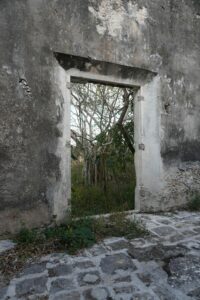
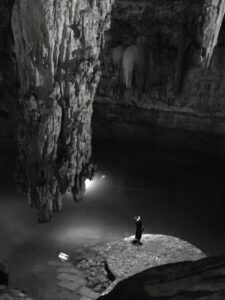
Beneath the flagstone floors of the Ex Convento de San Bernardino de Siena, a 16th-century convent in Valladolid, Yucatán, there is a cenote. Not unusual in that part of Mexico, the Yucatán Peninsula sits atop a vast limestone shelf riddled with underground water, and the Maya had been treating these wells as sacred for thousands of years. What is unusual is what INAH archaeologists found at the bottom of this one in early 2026.
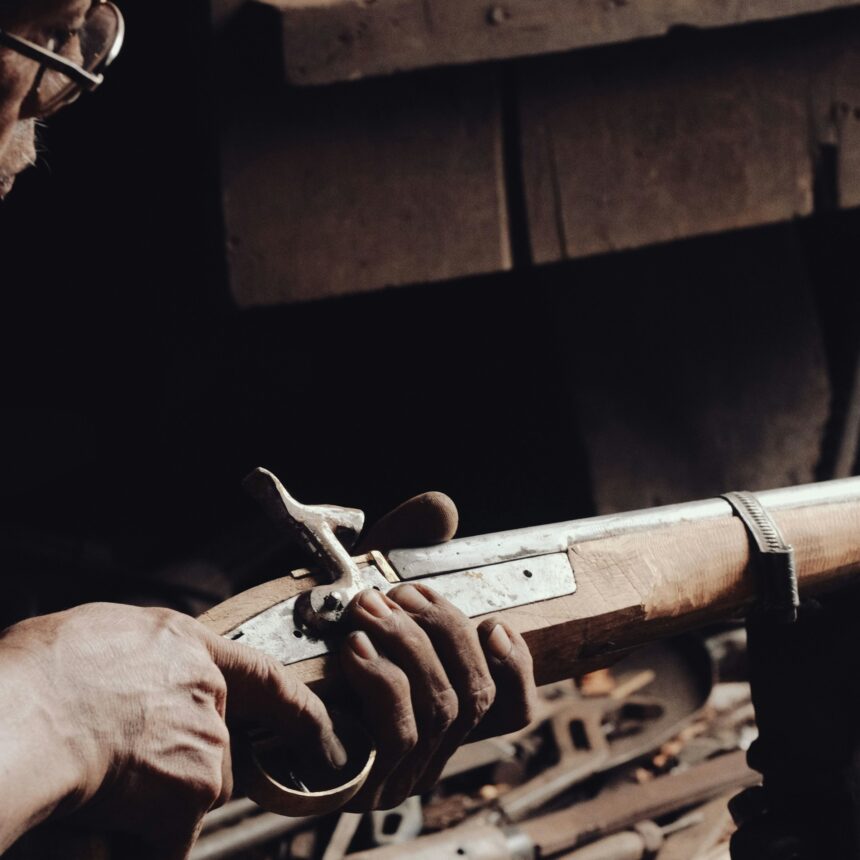
One hundred and fifty-three muskets and rifles. An iron cannon, reported to be still mounted on its wooden carriage. And the quiet, heavy fact of what they mean.
The War That History Forgot
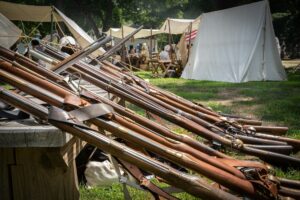
The Caste War of Yucatán began in 1847 and did not formally end until 1901. Fifty-four years. In that span, estimates suggest that hundreds of thousands of people died or fled the Yucatán Peninsula. The population was roughly halved. For comparison, the American Civil War lasted four years and claimed an estimated 620,000 lives across a nation ten times the size. The Caste War was proportionally catastrophic, and most people in the United States have never heard of it.
It began when Maya communities across Yucatán rose against the mestizo and Creole landowning class that had pushed them off communal lands for decades. By 1848, Maya forces had swept through much of the peninsula and came close, genuinely close, to driving the Yucatecan government into the Gulf of Mexico. The government, running out of options and running out of time, made a decision that now sits at the bottom of a cenote.
153 Guns and One Iron Cannon
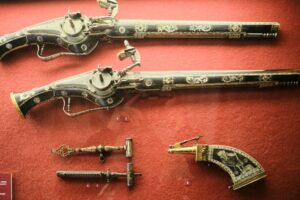
Here’s the strange part. The weapons they found are not local. According to reporting by The Art Newspaper and Heritage Daily, archaeologists documented 153 muskets and rifles, reported to be of Spanish and British origin, plus an iron cannon that INAH describes as the only one ever recovered from a Yucatán cenote. The cannon still sits on its original wooden carriage. Underwater, in the dark, for somewhere between 175 and 178 years.
The weapons were likely submerged in the early years of the conflict, around 1847—1848, during the most desperate phase of the war. The logic, reconstructed from the site, is grimly practical: rather than let Maya forces capture them, soldiers or government officials lowered the guns into the sacred well. Weapons that the government could not use, they made sure no one else could use either.
It is worth sitting with that image. Not a battle. Not a siege. A deliberate choice to drown an arsenal in holy water.
What Else the Cenote Holds
The cenote, known as Síis Já, is not only a weapons cache. INAH researchers also documented Maya ceramics and Chinese porcelain tentatively dated to the 18th century at the site. That mix tells its own story, centuries of offering, trade, and sacred use layered beneath a colonial convent that was itself built on top of a Maya community. The Spanish built the convent in the 16th century, and the cenote beneath it had likely been in use long before that.
The site is now under threat from illegal tourism. Visitors have been entering the cenote without authorization, and the fragile wooden carriage on the cannon is particularly vulnerable. INAH has not yet announced formal protective measures, as of this writing.
A War Measured in Silence
The Caste War of Yucatán does not have the cultural footprint it deserves. There is no equivalent of Ken Burns making a documentary. There is no memorial on the National Mall. Most American textbooks skip it entirely, even though it reshaped the entire Yucatán Peninsula and rippled through U.S. and Mexican relations for decades afterward.
The cenote changes nothing about that history. But it gives us something history books rarely provide: a single, physical, almost unbearable image. A government so cornered it threw its own guns into the ground. A sacred well that kept the secret for 175 years.
The cannon is still down there, on its wooden carriage, in the dark. And now we know it.
This article was researched, written, and edited by our human editorial team. AI tools were used in a limited research-assistant capacity. All claims were independently verified.