

George Washington was not supposed to be a spymaster. He was a general, a farmer, a man who prided himself on directness. And yet, in the darkest stretch of the Revolutionary War, he built something that professional intelligence services would still study two hundred years later, a spy network so airtight, so disciplined, that the most powerful military force on earth couldn’t find it.
They called it the Culper Ring. And the man Washington trusted to run it spent his days hunting down exactly the kind of people he secretly was.
The war, by 1778, was not going well. The Continental Army had survived Valley Forge barely intact. The British had settled comfortably into New York City, using it as their base of operations, their social hub, their command center. To know what the British were planning, Washington needed eyes inside the city. Not soldiers. Not officers. Ordinary people. The kind the British would never bother watching.
The Man Who Hunted Spies While Being One
Benjamin Tallmadge was Washington’s intelligence chief, the man who designed the Culper Ring’s structure and recruited its members. His official role, the one the British knew about, was as a Continental Army officer.
His unofficial role was tracking down Loyalist informants and British agents operating behind American lines. He was, in other words, a spy hunter. Which meant he understood exactly how British counterintelligence thought. He used that knowledge to build a network they couldn’t see.
Tallmadge kept the ring compartmentalized in a way that was almost modern. Members didn’t know each other’s real names. They used code numbers. Washington himself was assigned a number. The city of New York had a code name. Letters were written in invisible ink, a chemical formula supplied by an American sympathizer, and passed through a chain of couriers who each knew only their own small piece of the route.
Here’s the part that still catches people off guard. The ring’s most valuable operative in New York City may have been a woman. Her identity has never been confirmed. Historians have debated for decades who she was: a merchant’s wife, a socialite, someone with access to British officers’ dinner tables. She is known in the historical record only by her code number. Agent 355.
She reportedly passed on intelligence that helped expose one of the most damaging betrayals in American history.
The Betrayal That Almost Ended Everything
Benedict Arnold’s plan to hand the fortification at West Point over to the British came within a thread of succeeding. Some historians have suggested the Culper Ring may have picked up signals that something was wrong before the plot fully unraveled, though the precise extent of the ring’s role in exposing the conspiracy remains debated.
British Major John André, Arnold’s contact, was captured by American militia with incriminating documents in his boot. Arnold fled. André was executed.
Whether the ring’s intelligence directly triggered André’s capture or whether it arrived alongside other warnings is still debated by historians. But the network was active, watching, and feeding information to Washington at exactly the moment the betrayal came apart.
That’s not a coincidence historians dismiss lightly.
What Made It Work When So Many Others Failed

British intelligence during the Revolution was not incompetent. They ran their own networks, paid their own informants, and caught plenty of American agents. What they couldn’t do was find the Culper Ring, and the reason comes down to something almost boring: patience and discipline.
Washington was meticulous about protecting his sources. When he suspected a leak, he didn’t push for more information; he went quiet. He told Tallmadge to slow the network down rather than risk exposing it. That kind of institutional restraint is harder than it sounds, especially when you’re losing a war and desperate for intelligence.
The couriers moved on irregular schedules. Dead drops were used instead of direct handoffs. Even when British officers suspected something was off about certain residents of New York and Long Island, they couldn’t identify who was actually involved. The ring operated for years without a single confirmed arrest of a core member.
Think about what that means. A handwritten, horseback-courier spy network in a small colonial city, run by people with no professional training, against the full counterintelligence apparatus of the British Empire. And the British never cracked it.
The Legacy Nobody Talked About for 150 Years
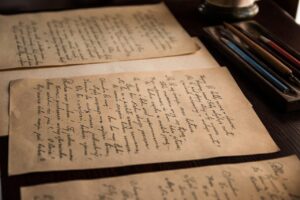
The Culper Ring’s existence wasn’t widely known until a historian named Morton Pennypacker began piecing together the coded letters and real identities in the early twentieth century. For roughly 150 years, the people who had run one of America’s most effective intelligence operations were simply quiet. They went back to their farms, their shops, their ordinary lives. No memoirs. No public recognition.
Robert Townsend, believed to be the ring’s primary agent inside New York City, reportedly never acknowledged his role publicly. He ran a merchant business. He wrote for a newspaper. He was, by all appearances, exactly what the British had always assumed: a civilian with no particular significance.
That was the point.
There’s something almost strange about the way this story ended. The men and women who kept Washington’s revolution alive through intelligence, who told him where the British fleet was moving, what the officers were planning, when the loyalists were feeding information back across the lines, never got a parade. They didn’t want one. The whole operation depended on no one ever knowing they’d been involved.
The CIA wasn’t founded until 1947. The Office of Strategic Services, its wartime predecessor, came together during World War II. But the operating principles those agencies would eventually codify, compartmentalization, cover identities, dead drops, source protection, need-to-know, were already running, in practice, in a network of farmers and merchants and at least one unnamed woman, two centuries earlier.
Washington got credit for the Revolution. The Culper Ring got a footnote. Most of them got nothing at all.
If the British had found them, and they came close, more than once, the story of American independence might read very differently today.
This article was researched, written, and edited by our human editorial team. AI tools were used in a limited research-assistant capacity. All claims were independently verified.