


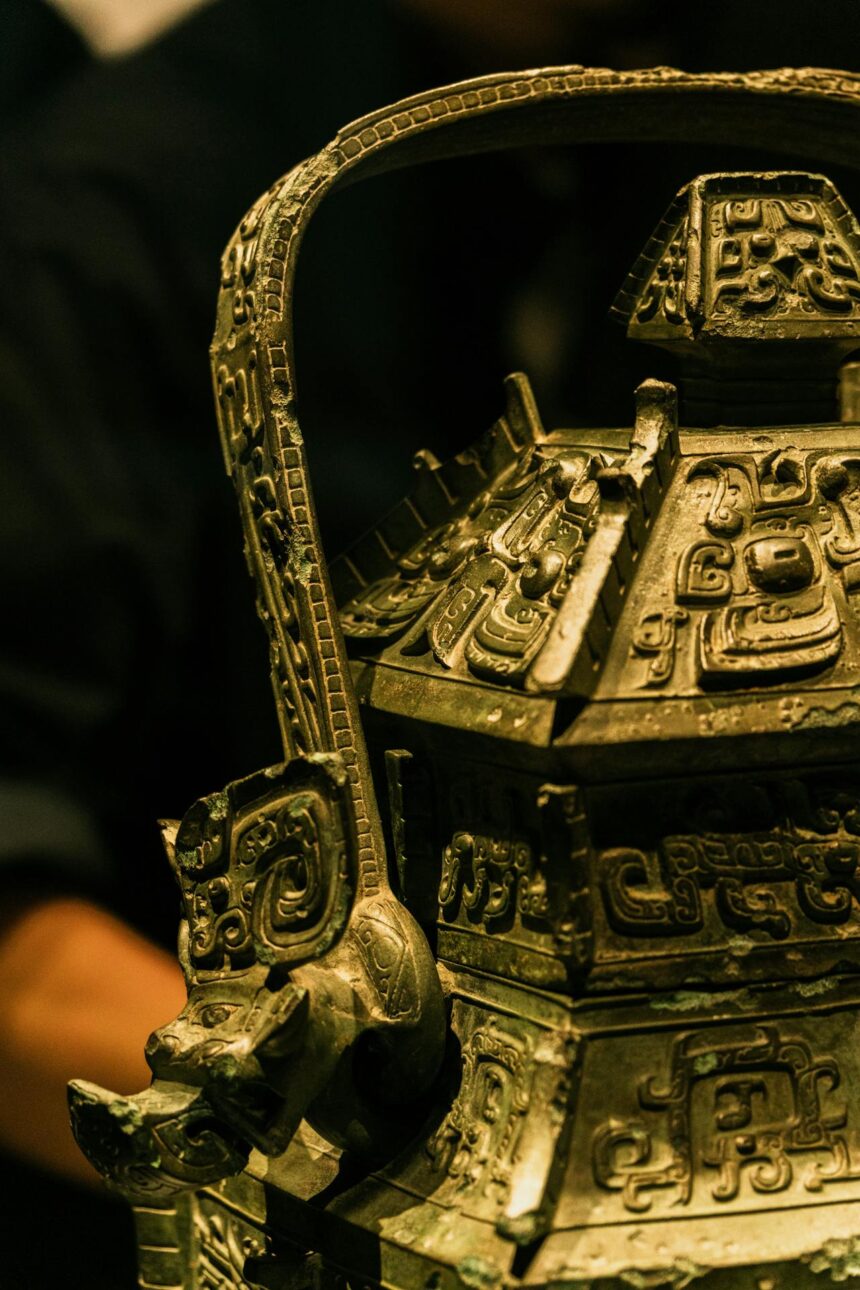
The letter was never supposed to survive. Sealed inside a bronze capsule sometime in the 13th century, pressed into soil that would shift and settle and forget it entirely, it waited. Eight hundred years is a long time for paper to hold its shape. And yet.
When archaeologists cracked open the capsule, they found a document that didn’t just survive; it spoke. Not in the fragmented, cautious way that most medieval records speak, but with specificity. Names. Routes. Instructions. The kind of detail that rewrites assumptions rather than confirming them.
Here’s what made the discovery genuinely strange: the letter described communication networks between regions that historians had long assumed had little meaningful contact in this period. The medieval world, the standard account goes, was a patchwork of isolated communities, connected loosely by trade routes and church authority, but mostly inward-facing. Slow. Fragmented. This letter suggested something else entirely.
The Capsule That Wasn’t Supposed to Exist

Bronze capsules used for document preservation were known in antiquity, but their use in the High Medieval period is sparsely documented. Finding one intact, with contents, was unusual enough. Finding one whose contents actively challenged the scholarly consensus was something else. Researchers who examined the letter noted that the handwriting, ink composition, and parchment were consistent with 13th-century production, meaning the document almost certainly wasn’t a later insertion or a forgery placed in an older container. It was sealed when it was buried. It was buried when it was written.
What the letter described, in careful and methodical language, was a coordination system. Not diplomatic correspondence between monarchs. Not a church communiqué. Something more pragmatic: instructions for how information should move between specific named locations, who was responsible for carrying it, and what should happen if a carrier failed to arrive within an expected window.
What 800 Years of Silence Actually Hid

The assumption scholars had carried for decades was partly a function of what survived. Most medieval communication left traces only when it was important enough to be copied, archived, and stored by institutions with the resources to do so, such as monasteries, royal courts, and cathedral libraries. Casual, functional correspondence between merchants, administrators, or local officials rarely made it through. It wasn’t saved because no one thought to save it.
That’s the part most people miss. The absence of evidence for medieval communication networks wasn’t necessarily evidence of their absence. It was evidence of what got preserved. And what got preserved was what powerful institutions considered worth keeping.
So when a sealed capsule bypasses that entire selection process, when a document survives not because someone chose to archive it but because it was physically sealed against decay, what you get is a different kind of record. Unfiltered. Unedited. Kept not for posterity but for a practical purpose that stopped mattering before anyone came back to retrieve it.
The Sentence That Changed the Reading

One passage in the letter drew particular attention. It referenced a secondary location as a relay point, implying that the route described wasn’t a single connection between two places but part of a longer chain. A node, not a terminus. If historians take that reading seriously, and several have indicated they do, it suggests the network the letter was part of extended considerably beyond what the document itself records.
Which is, frankly, the most interesting thing about it. Not what the letter says, but what it implies existed around it. A document this specific, with this much assumed infrastructure, doesn’t appear in isolation. Someone built the system that was operating inside. And we have almost no other record of it.
The bronze capsule gave us one letter from a conversation that was clearly much larger. The rest of that conversation is still out there somewhere, in soil that hasn’t been turned yet, in archives that haven’t been fully read, in the margins of documents that scholars haven’t thought to look at sideways.
If one sealed capsule can overturn 800 years of assumptions about medieval connectivity, it’s worth asking what else we’ve been wrong about simply because the wrong things survived.
This article was researched, written, and edited by our human editorial team. AI tools were used in a limited research-assistant capacity. All claims were independently verified.