


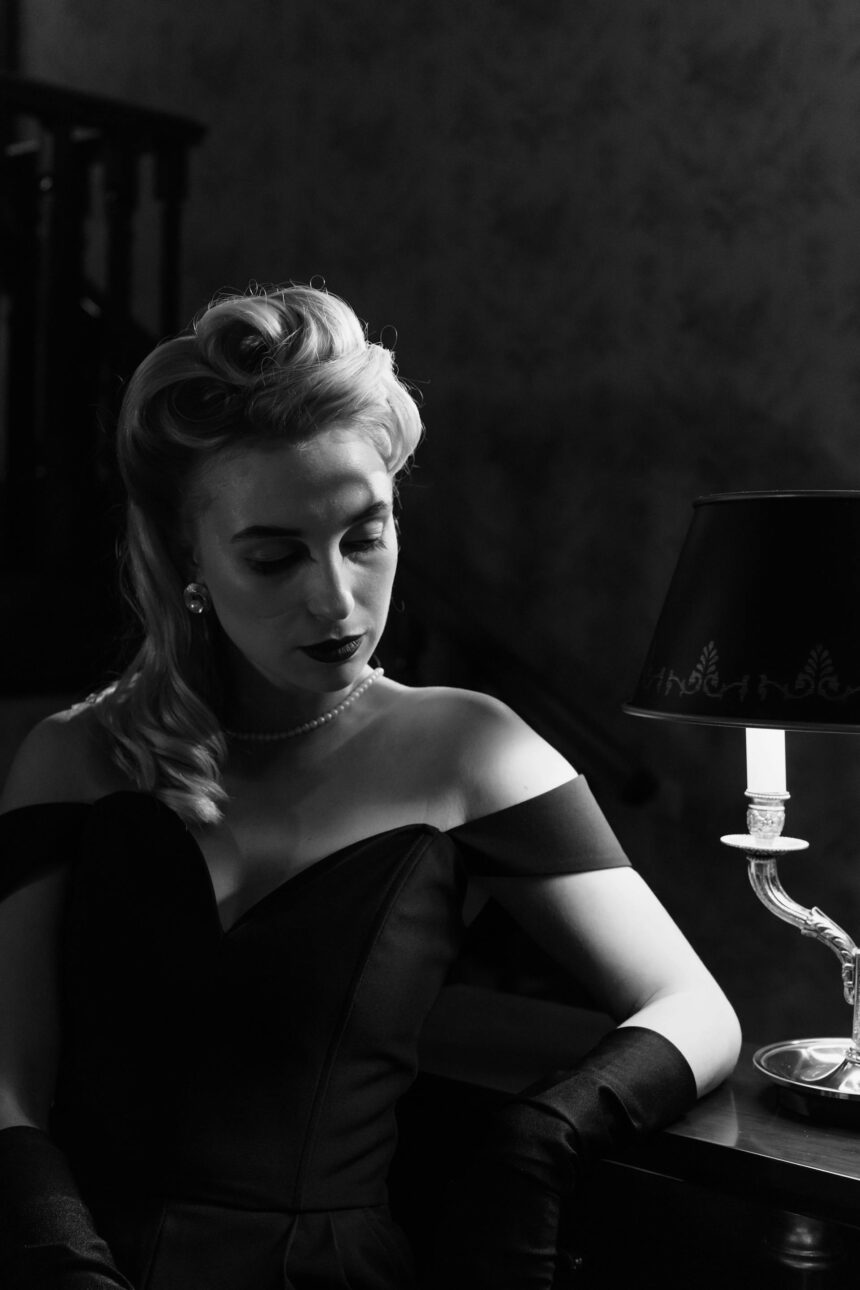
Some stories stay buried not because no one found them, but because the people who knew them decided silence was safer than credit.
This is one of those stories.
During the Second World War, a small number of women managed to do something that trained male operatives repeatedly failed at: they passed unnoticed inside Nazi-controlled institutions, cultivated trust over months or years, and fed intelligence to Allied networks at enormous personal risk.
Most of them came in from the outside résistance couriers, foreign nationals, planted agents. A smaller group did something harder. They were already there, embedded in the structures of the regime itself, and they stayed.
The woman at the center of this story was one of those. Her precise identity, like that of several women agents from this period, has not been definitively established in the public record, and that dispute is itself the story.
She worked in proximity to senior figures within Nazi-controlled administrative or military structures, passed intelligence through channels that historians have since traced but not always agreed on, and survived the war. Then, when the ledgers were settled and the medals were distributed, her name was absent. Not redacted. Absent.
What the Archives Actually Show

In the decades since the war ended, intelligence historians have pieced together a picture of how Allied spy networks functioned inside Germany and occupied Europe. What that picture reveals, again and again, is a systemic pattern: women who served as agents were routinely classified at lower levels of operational importance than the intelligence they produced actually warranted.
This wasn’t an accident of bureaucracy. It was policy.
The British Special Operations Executive, the American OSS, and their Allied counterparts ran on a simple institutional assumption: women were support. They gathered intelligence; they were “assets” or “contacts.” Men who gathered the same intelligence were “officers” or “operatives.”
That distinction was not semantics. It was the entire ballgame, because those titles determined what ended up in the postwar record and what got quietly left out.
For the particular woman this article concerns, for women agents in comparable situations, the trail often runs through secondary sources, postwar testimony from other operatives, and documents that name them only obliquely. Intelligence historians who have studied the period have noted the gap between her apparent operational significance and her official absence from the record.
Here’s the strange part: that absence was not passive oversight. In at least some documented cases involving women agents from this era, the decision not to file formal recognition was made deliberately, by people who knew exactly what those agents had done.
The Problem With Being Too Useful

Running an agent inside a high-value target institution creates a specific kind of operational problem: if you acknowledge her after the war, you acknowledge that she was there. And if you acknowledge that she was there, you may compromise sources, methods, or the identities of the people who handled her.
That logic was used, legitimately, sometimes, to justify keeping agents anonymous for years after the conflict ended. But in the cases of several women who operated in occupied Europe and inside Reich institutions, historians have concluded that the silence went beyond operational caution.
It became an institutional convenience. These women had done the work. Acknowledging them would have required acknowledging the degree to which women had been carrying genuine operational weight all along, weight that the agencies, in their postwar public posture, preferred to assign to male officers.
The cost of that convenience was paid by the agents themselves.
For the woman this article describes, the war ended, and the silence began almost immediately. Colleagues who survived gave accounts that placed her in proximity. Some women agents from this period did provide postwar testimony about their access to German military and administrative figures, accounts that were recorded, filed, and in some cases classified at levels that limited public access for decades.
Those accounts were taken down, filed, and in some cases classified at levels that kept them out of public view for decades. By the time the relevant archives began to open, in the 1970s and 1980s in Britain, and later in the United States, the bureaucratic moment for recognition had passed. The people who could have confirmed her role were dead or silent.
Why the Record Gets Built the Way It Does

Historians like to blame the lost archive. The fire, the flood, the filing clerk who just didn’t bother. Sometimes that’s true. Real chaos followed every nation that fought in World War II, and plenty of records genuinely didn’t survive it.
But omission is also a choice.
When intelligence agencies went back through their wartime files and decided what to document, what to classify, and what to quietly let die, they made active calls about whose contributions future historians would be able to find. Women, especially those who had operated in roles the agencies would rather not advertise, got the short end of that process at a rate that scholars have since documented across British, American, and French archives.
A significant number of women’s operational records were misfiled, understated, or simply never written up at all. Some have been formally recognized, a few of them posthumously. Others are still where they were left: footnotes in someone else’s file, absent from the main text.
The woman this article concerns is, by most accounts of historians who have studied women agents from this period and theater of operation who fell into that second category, formally unrecognized despite documented operational significance, and represents a pattern that historians have identified across multiple cases.
What Silence Actually Costs

There’s an argument, sometimes made by historians who study intelligence, that anonymity was what the agents themselves wanted. That operating in secret for years shaped a preference for continued invisibility. That some of the women who were never officially recognized had made their peace with that outcome, or had even chosen it.
That argument deserves more skepticism than it usually receives.
Here’s the thing. The women who eventually did speak, in memoirs, in late-life interviews, in letters their families released after they died, mostly said the same thing: they wanted credit, they asked for it through proper channels, and they were told the paperwork didn’t support it. The paperwork didn’t support it because someone had arranged it that way.
What’s left, then, is a gap in the official record that the official record itself created. The spy who passed intelligence from inside the Nazi high command, at a time when discovery meant death, when the margin for error was zero, when the network she served depended on her maintaining a performance under pressure that most people would not survive, did not receive a formal commendation. Did not receive a pension calibrated to her actual role. Did not receive, in most cases, so much as an official letter of acknowledgment.
What she received was silence. And silence, in the intelligence world, was the one currency that got distributed to everyone equally, regardless of what they’d earned.
The archives are still opening. Not all of them. But enough that historians working today have tools their predecessors didn’t. The question isn’t whether her name is in there somewhere.
It almost certainly is. The question is whether anyone with the institutional authority to act on it is still paying attention.
This article was researched, written, and edited by our human editorial team. AI tools were used in a limited research-assistant capacity. All claims were independently verified.