

The city shouldn’t have survived.
By the summer of 1944, Adolf Hitler had made his intentions clear: if German forces had to abandon Paris, they would leave nothing standing. The bridges were to be blown. The monuments were destroyed. The city was reduced to rubble, an intention documented in postwar accounts of Hitler’s orders to the German military governor of Paris. Every other major European city that had passed through his war machine told the same story. Warsaw was methodically demolished. Rotterdam was bombed into submission on the first day of German occupation. Dresden burned for days. Yet Paris is home to the Eiffel
Tower, Notre-Dame, the Louvre, 2,000 years of accumulated European civilization, came through the occupation largely intact. For decades, the official explanation was heroism: a German general who disobeyed orders, French resistance fighters who held the line, and the timely arrival of Allied forces.
That story isn’t wrong. It’s just incomplete.
What took much longer to surface was the financial dimension. French authorities, operating under the Vichy government’s Finance Ministry and collaboration apparatus, had been making substantial payments to the German occupation authorities throughout the war. The scale of those payments was staggering. France was effectively funding its own occupation, covering the costs of German troops stationed on French soil, contributing to German war production, and transferring wealth from French banks and industries into German hands at a rate that made France one of the most economically exploited nations in occupied Europe. The precise figures took historians years to reconstruct, and the full accounting emerged gradually over the postwar decades as archives became accessible to researchers.
And here’s the thing most people still don’t quite grasp: this wasn’t extortion in the simple sense. Yes, the Germans had the guns. But the Vichy administration made choices, active, deliberate choices, about how much to pay, what to prioritize, and what they hoped to get in return. The preservation of Paris, and of French economic and cultural infrastructure more broadly, was part of that calculus.
The Occupation Economy Nobody Wanted to Discuss
Under the armistice terms signed in June 1940, France agreed to pay the costs of the German occupation. The daily charge was set at a level historians have described as far exceeding the actual cost of stationing troops. Not a rounding error. The excess was the point. It dressed up the transfer of French wealth to Berlin as an administrative fee rather than straight-up plunder, and French banks, including major institutions such as the Banque de France, facilitated the transfers through the occupation’s clearing account mechanism.
French banks facilitated the transfers. French industry retooled for German contracts. French workers, some voluntarily and many not, contributed labor to German war production. The Reichsmark-to-franc exchange rate was fixed at a level that gave German soldiers and administrators enormous purchasing power in French markets, meaning ordinary French consumers were, in effect, subsidizing the comfort of their occupiers every time a German officer bought a bottle of Bordeaux or a silk scarf.
What made all of this so politically toxic after liberation was the question of agency. The Vichy government hadn’t simply been a passive instrument of German will. It had negotiated, collaborated, and in some cases volunteered cooperation that the Germans hadn’t even requested. French officials wanted to believe, and wanted the world to believe, that they had done what was necessary to protect France. That’s partly true. But the documents, when they finally emerged, showed something more complicated.
The General Who Said No, and the Deal That Made It Possible
The most famous moment in the story of Paris’s survival is the one involving Dietrich von Choltitz, the German military governor of Paris in the final weeks of the occupation. He received Hitler’s orders to destroy the city. He didn’t carry them out. The standard tells it as a conscience call. A military man looked at Paris and couldn’t do it.
Von Choltitz himself encouraged that interpretation after the war. And it may even be substantially true. But historians who have worked through the occupation archives have noted that his decision didn’t happen in a vacuum. The financial and logistical entanglements between the German occupation authorities and French civilian administration had created a web of relationships and interests that made wholesale destruction harder to execute cleanly. People on both sides had reasons to want the city standing.
That doesn’t make von Choltitz’s choice less real. It does make it less simple.
The broader suppression of the financial history was, in hindsight, almost inevitable. France, after liberation, needed a usable national story. The resistance narrative, brave French men and women fighting the occupiers, the collaborators prosecuted and punished, the nation reborn, was emotionally necessary and largely true in its outlines. But it couldn’t easily absorb the fact that the French state had been writing enormous checks to Berlin for four years, and that some portion of those payments had effectively purchased the survival of Paris itself.
What the Documents Showed When They Finally Surfaced
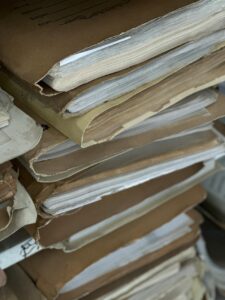
Historians started publishing serious economic analyses of the occupation that emerged from the 1970s onward. What they found wasn’t a secret that had been brilliantly hidden. French citizens living under the occupation knew their country was being drained dry. What got buried was the scale, the willing participation, and above all,l the paper trail showing Vichy officials sometimes went further than Berlin even asked. The archives told them.
The French state archives were not fully open to researchers until well after the war, with meaningful access expanding gradually from the 1970s through the 1990s under successive French archival access reforms. When access improved, what came out was a more granular record of who knew what, who signed what, and who benefited. Some of that record was damning. Some of it was more ambiguous, evidence of people trying to minimize harm within a terrible situation. History rarely cooperates with clean moral categories.
What the documents couldn’t settle, and what historians still debate, is exactly how much the financial relationship influenced the military decisions about Paris specifically, a connection historians have explored but not definitively resolved.
The connection is plausible and well-documented in general terms. The precise mechanism, the moment when a payment or a relationship translated into a decision not to push the demolition button, may never be fully reconstructable.
The City That Stood
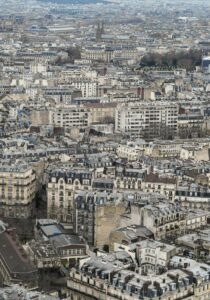
Stand on the Pont Neuf today and look down the Seine toward the Île de la Cité, and you’re looking at something that had no real right to survive the twentieth century. Most of what you see is centuries old. None of it burned.
The story of why requires holding several things at once: genuine resistance and genuine collaboration, individual courage and institutional compromise, a German officer who made an unexpected choice, and a French government that spent four years making expected ones. The heroism is real. The payments are also real. Paris got lucky, and Paris also, in a way that French history spent decades not quite saying aloud, helped pay for its own luck.
That’s not a comfortable conclusion. It’s an honest one.
Whether the officials who buried this history for forty years made the right call, whether a nation needs a clean story to rebuild, or whether the truth is always worth the cost, is a question that doesn’t have an obvious answer. But it’s worth asking now, when the last people who lived through those years are nearly gone.
This article was researched, written, and edited by our human editorial team. AI tools were used in a limited research-assistant capacity. All claims were independently verified.