



In early 2026, inside a doughnut-shaped reactor chamber at the Korea Institute of Fusion Energy, a ball of superheated plasma held together for a record-breaking duration reported to exceed 100 seconds. That is longer than most people take to read a news article. It is also more than double the same facility’s previous record, set not many years earlier. The result was reported to have received independent institutional verification.
On the same day the same period in early 2026 a startup called Helion Energy announced that its Polaris prototype had reached temperatures exceeding the threshold required for fusion ignition. That is roughly ten times hotter than the core of the Sun. One record came from a government laboratory. The other came from a Silicon Valley-backed company operating within a rapidly growing private fusion industry. Both happened in the same month. The fusion community, which has spent fifty years absorbing disappointment, started using phrases like “before 2045” without immediately looking embarrassed.
Why 100 Million Degrees Is the Magic Number
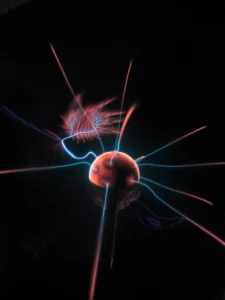
The physics here are worth slowing down for, because they explain everything.
Fusion works by forcing hydrogen nuclei close enough together that they merge, releasing energy. The problem is that positively charged nuclei repel each other violently. To overcome that repulsion, you need heat, not warmth, not industrial-furnace heat, but plasma heat that strips electrons off atoms entirely and pushes the remaining nuclei fast enough to collide despite their mutual hatred. The number scientists arrived at, after decades of calculation and experiment, is approximately 100 million degrees Celsius.
The Sun fuses hydrogen at about 15 million degrees, but it can do that because its gravity is enormous, it essentially squeezes fuel into contact through sheer mass. Earth-based reactors have no such luxury. They have to compensate for the absence of gravity with temperature, which is why the threshold for practical fusion on Earth is roughly seven times hotter than the Sun’s core. When Helion’s Polaris prototype hit 150 million degrees, it cleared that bar by a significant margin.
Temperature, though, is only half the equation. The other half is time.
The Confinement Problem, and What 102 Seconds Means

A plasma hot enough to fuse doesn’t want to stay put. It wants to expand, cool, and stop reacting. The entire engineering challenge of a tokamak reactor, the doughnut-shaped magnetic confinement device used by KSTAR, is keeping that plasma confined and stable long enough for net energy gain to occur. Every second of sustained plasma is a small engineering victory. One hundred and two seconds is a different category of result entirely.
To understand why, consider what the previous record of 48 seconds represented. It was already a world-class benchmark, a machine threading the needle between thermal instability, magnetic field fluctuations, and plasma disruption events that can end a run in milliseconds. Doubling it means the stabilization techniques, the magnetic field geometry, and the real-time control systems all held together under conditions roughly equivalent to a sustained miniature star. The Korea Institute of Fusion Energy reported the result, and any independent verification of the result matters because fusion research has a long history of claims that didn’t survive outside scrutiny.
And here’s the strange part: both milestones landed in the same four-week window, from two completely different approaches. KSTAR is a publicly funded research reactor using a conventional tokamak design, operating within the international scientific community’s long-term roadmap. Helion’s Polaris uses a different approach, a colliding-beam configuration that the company has argued can reach net energy faster than the tokamak path. These are not competing teams sharing data. They are parallel bets on different physics, and both advanced their positions in the same month.
The Money Moved Before the Records Did

Private capital has a way of pricing in information before the public does. The fusion industry attracted billions in private investment in recent years, with more than 40 private fusion companies now operating globally. That number was essentially zero fifteen years ago. Investors don’t fund fifty-year timelines. The money flowing into fusion right now reflects a calculation that the timeline has compressed.
The U.S. Department of Energy’s Milestone-Based Fusion Development Program disbursed $46 million to eight companies in early 2026. The structure of that program is worth noting: it pays out on demonstrated milestones, not on promises. The government, in other words, is no longer funding fusion the way it funds basic research, as a long-horizon public good. It is funding it the way it funds technology development, with performance gates and verified progress. That is a structural shift in how the federal science establishment thinks about when fusion arrives.
None of this means fusion power is on next year’s grid. The distance between holding plasma for 102 seconds and running a commercial power plant that sells electricity is still substantial. Net energy gain, producing more power from a fusion reaction than was required to initiate it, has been demonstrated only once in a controlled laboratory setting, at the National Ignition Facility in December 2022, and that experiment used conditions far removed from what a continuous power plant would require. Engineering a sustained reaction, capturing the heat it produces, converting that heat to electricity, and doing all of it economically enough to compete with solar or natural gas are separate problems, each with its own difficulty.
What Has Actually Changed

What changed in February 2026 is the conversation’s register. For most of fusion’s history, the honest answer to “when?” was “we don’t know.” The records set this month don’t answer that question definitively. But they narrow the uncertainty range in a way that previous incremental progress had not. Scientists at credible institutions, speaking to publications like Fortune, began discussing grid-scale fusion before 2045 as a serious scenario rather than an optimistic fantasy.
The joke, always 30 years away, was funny because it was true. It remained true for so long that it became a structural assumption about fusion energy, baked into energy policy, into investment decisions, into the way journalists covered the field. Two records in one month don’t erase fifty years of slow progress. But they are, at minimum, evidence that the gap between what is physically possible and what engineers have achieved is finally narrowing fast enough to matter.
The plasma held for 102 seconds. The math, slowly, is changing.
This article was researched, written, and edited by our human editorial team. AI tools were used in a limited research-assistant capacity. All claims were independently verified.