


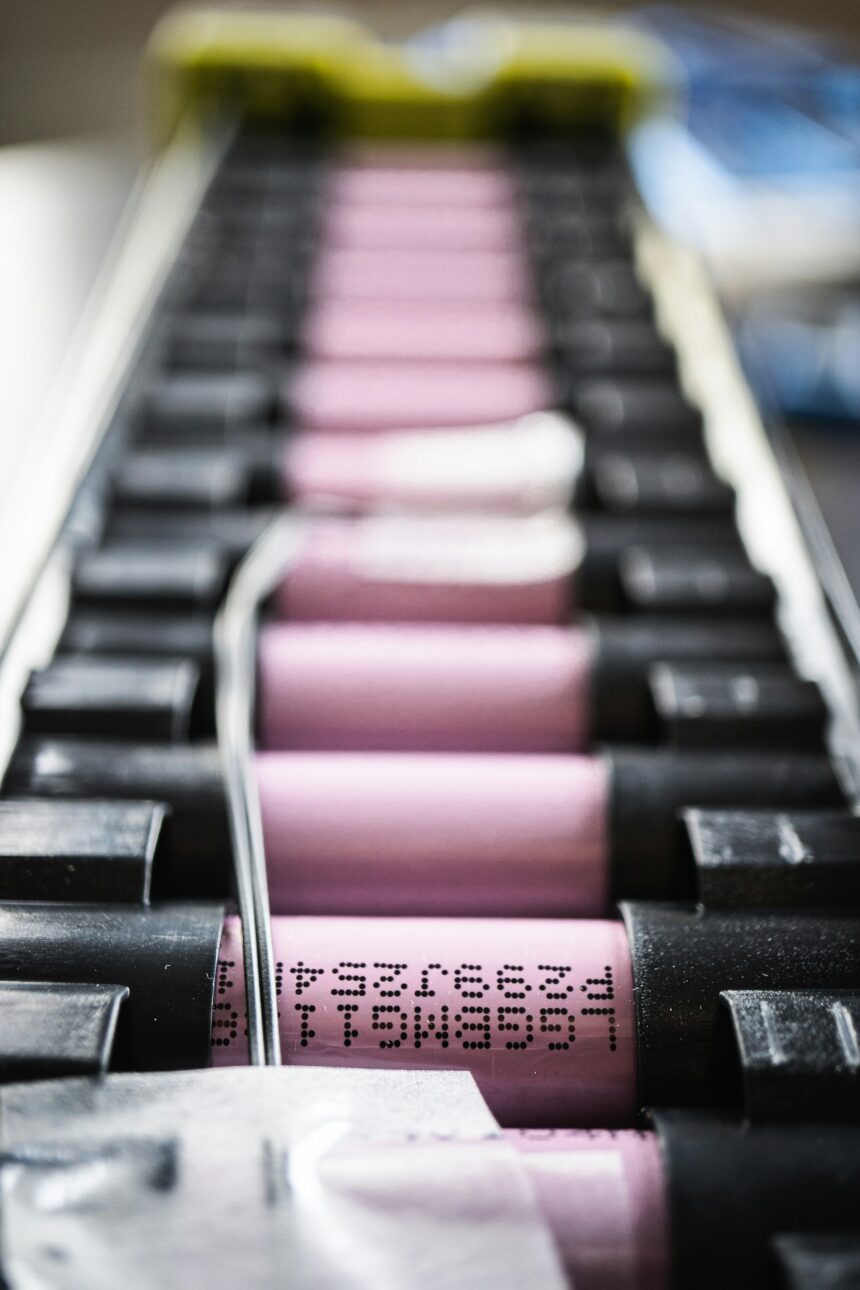
In April 2026, a company most Americans had never heard of quietly crossed a line that the global auto industry had been approaching for two decades. Greater Bay Technology (GBT), a Chinese battery maker, rolled its first A-sample all-solid-state battery cells off a working production line. The cells passed needle penetration tests, extrusion tests, and thermal shock tests. Not one of them caught fire.
That last detail is not a minor point.
The battery inside most electric vehicles today uses a liquid electrolyte, a flammable chemical solution that moves lithium ions between electrodes. It works well under normal conditions. But puncture it, overheat it, or charge it too fast, and that liquid can ignite.
It’s the reason EV fires burn hotter and longer than gasoline fires, and the reason fire departments have had to rethink their response protocols. The liquid is the problem. Solid-state batteries replace it with a solid material, which doesn’t burn.
And here’s the part the industry has been chasing since the early 2000s: that swap also allows faster charging and potentially longer range, because a solid electrolyte is more stable under the stress of rapid ion movement.
The company’s new cells are reported to support fast charging rates with minimal degradation over charge cycles with minimal degradation over charge cycles, meaning they don’t lose capacity as quickly as today’s lithium-ion packs when charged hard and often.
GBT is not new to fast charging. In recent years, the company set what it described as a world record for EV charging speed, taking a battery from 0% to 80% in a claimed record time using its Extreme Fast Charging technology using its Extreme Fast Charging technology. The solid-state cells represent a step beyond that: faster, safer, and built without the flammable architecture that made fast charging a thermal management headache.
The commercial pressure behind all of this is real and measurable. In recent years, electric vehicles represented a significant and growing share of new vehicle sales globally, up sharply from a much smaller share just five years earlier.
In China specifically, a majority of new vehicle sales were battery electric or plug-in hybrids. That scale creates a problem: the better lithium-ion gets, the more obvious its ceiling becomes. Range, safety, and charging speed are all constrained by the same liquid electrolyte that made the technology possible in the first place.
So why has solid-state taken this long? The chemistry wasn’t the only obstacle; manufacturing was. Solid electrolytes are brittle. They crack under the mechanical stress of repeated charging and discharging. They’re hard to produce at scale without defects. And defects in a solid-state cell don’t degrade performance gradually; they kill it. For twenty years, every promising solid-state advance ran into the same wall: laboratory results that didn’t survive contact with a factory floor.
Sodium-ion batteries have been highlighted as an emerging breakthrough technology, a parallel development that points to the same underlying shift: the industry is actively rebuilding the chemistry of energy storage, not just refining what it already has.
The specific moment, a production line, working cells, no fire, is the kind of concrete milestone that has been conspicuously absent from solid-state coverage for years. Every previous announcement came with a timeline measured in years and a caveat about manufacturing readiness. This one came with test results.
Whether GBT delivers at a meaningful commercial scale within its stated timeline remains to be seen over the next 12 months. But the question has changed. It’s no longer a question of whether solid-state batteries can be made. It’s whether they can be made fast enough.
This article was researched, written, and edited by our human editorial team. AI tools were used in a limited research-assistant capacity. All claims were independently verified.