


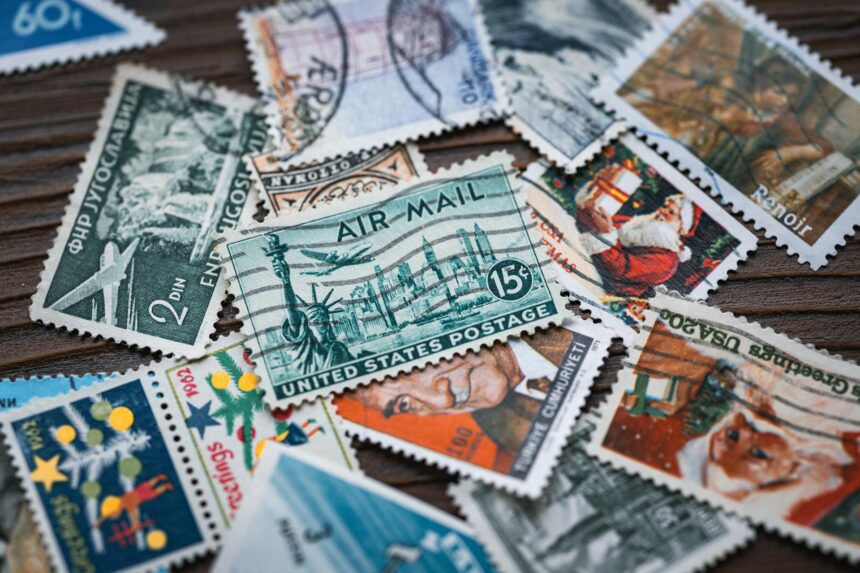
At the peak of their reach, Sperry & Hutchinson’s green stamps were reportedly being printed in greater volume than United States postage stamps a figure widely cited in accounts of the era but difficult to independently verify. The country’s housewives were redeeming them for toasters, luggage, and lawn furniture out of thick, glossy catalogs. And nobody called it a loyalty program. They just called it shopping.
That detail the volume comparison, lands differently when you sit with it. The U.S. Post Office was one of the largest logistical operations on earth. S&H was a private company selling sticky paper. And for a stretch of decades in the middle of the twentieth century, they were printing more of it.
The Mechanics of a Simple Idea
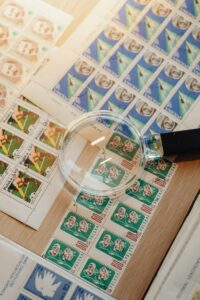
The S&H Green Stamp program launched in the 1890s and spent the first half of the 1900s building slowly. The core mechanism was almost offensively simple: buy groceries, get stamps. Lick the stamps, fill a booklet. Fill enough booklets, redeem them for merchandise at an S&H Redemption Center or through the catalog. No interest rate. No annual fee. No fine print about expiration windows. You bought things you were already going to buy, and eventually you got a blender.
Retailers loved it because it gave them a reason for shoppers to pick their store over the identical one across the street. In a postwar America where supermarkets were multiplying and competition was sharpening, that thin edge of differentiation mattered enormously.
Gas stations, grocery chains, and department stores signed up in very large numbers across the country. By the 1960s, S&H was operating what may have been the largest retail gift operation in the country, with redemption centers in cities across every state.
Here’s the part that doesn’t get enough attention: the stamps worked on a trick the brain plays on itself. Behavioral economists would later describe this kind of psychological separation between payment and reward as a form of “payment decoupling”, the gap between the cost embedded in a price and the reward that feels like a gift.
The stamps weren’t free. Their cost was baked into the grocery price before you ever touched a cart. But they didn’t feel like a price. They felt like a gift from the store. That gap between what was true and what it felt like is exactly what every airline, coffee chain, and hotel rewards program has been chasing ever since.
What the Catalog Actually Sold
The S&H Premium Catalog deserves its own paragraph. At its height, it was reportedly among the most widely circulated publications in the United States. Families kept it on the coffee table. Children circled items with pencil. It sold the experience of wanting, the anticipation of a reward that was coming, that you were working toward, that was yours once you filled the next booklet and the one after that.
The merchandise itself was aspirational but attainable. Not luxury goods. Not the kind of thing that made you feel guilty for wanting it. A camera. A bicycle. A set of stainless cookware. Items that sat at exactly the right altitude in the postwar American imagination: nice enough to feel earned, practical enough to justify.
What the catalog also did, quietly, was train an entire generation of American consumers to expect deferred reward. Buy now, earn now, spend later. The psychology of points-based spending, the gamification of consumption, didn’t start with airline miles in the 1980s. It started with lick-and-stick booklets in the 1950s.
Why It Fell Apart

The collapse, when it came, wasn’t sudden. It was structural.
Several forces hit at once in the 1970s. Inflation quietly ate the stamps’ redemption value. Retailers started doing the math and didn’t like the answer: the program’s cost was being passed to shoppers through higher shelf prices, and shoppers were noticing. Discount stores were rising fast, and discount stores competed on price. You couldn’t do both. The stores that dropped stamps cut their prices, and price won.
The Federal Trade Commission also took a harder look at trading stamp programs during this era, examining whether the pricing practices around them constituted unfair competition. The regulatory attention didn’t kill the program outright, but it added friction at exactly the wrong moment.
And then credit cards arrived in earnest.
This is where the standard history gets a little too clean. The credit card didn’t defeat the green stamp in a head-to-head battle. The two systems served different psychological functions. Stamps rewarded patience; cards rewarded immediacy. But as credit became democratized through the 1970s and 1980s, the idea of waiting, filling booklets, saving up, redeeming eventually, started to feel like an older economy’s logic. Americans were learning to want things now. The stamps had taught them to want. The cards taught them not to wait.
The Legacy Nobody Credits
S&H eventually pivoted to digital rewards in the early 2000s, attempting a relaunch as a web-based loyalty program. It was a reasonable attempt. It didn’t recapture much. The original program’s power had never been the stamps themselves, it had been the physical ritual of licking, sticking, and filling. The booklet on the kitchen counter. The catalog on the coffee table. Strip that out, and you have just another points system. There are several hundred of those now.
Every major retailer in America currently runs some version of what S&H invented. Airlines, coffee chains, hotel groups, grocery stores, all of them are operating variations on the same core mechanism: separate the earning from the spending, make the reward feel like a gift, keep the customer coming back. The math has gotten more sophisticated. The psychology hasn’t changed at all.
Which sounds like a tribute to S&H’s genius. But there’s a dry irony in it too. The company that may have done more to shape modern American consumer behavior than any single retailer has been largely forgotten, its name surviving mostly in the memories of people who remember the smell of that licked paper and the satisfying weight of a full booklet.
The stamps stopped being printed decades ago. The habit they installed never did.
This article was researched, written, and edited by our human editorial team. AI tools were used in a limited research-assistant capacity. All claims were independently verified.