


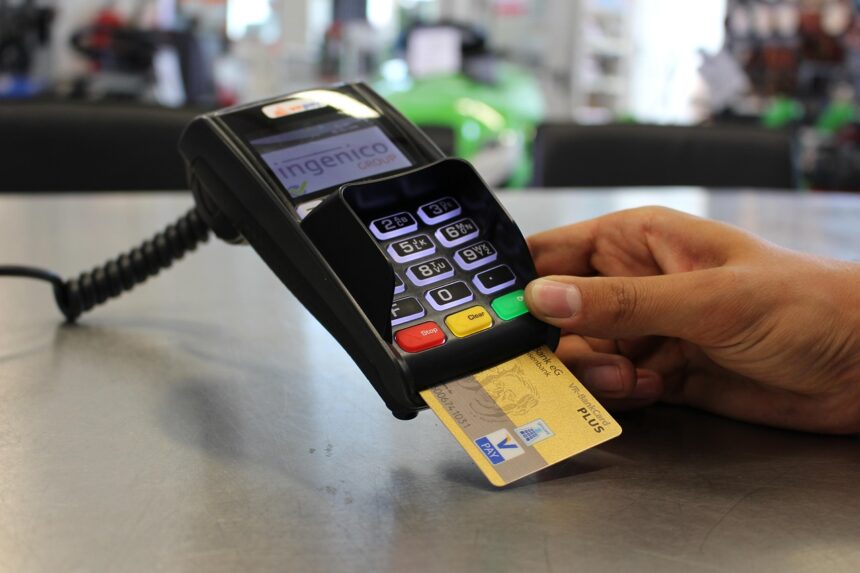
The cashless society was supposed to be here by now. Economists predicted it in the 1990s. Tech companies promised it in the 2000s. Fintech startups swore it was finally happening in the 2010s. And yet, as of 2023, the Federal Reserve reports that Americans still use cash for roughly 16% of all transactions, and that number has barely budged since 2021, after years of pandemic-era predictions that COVID would finally kill the dollar bill for good. It didn’t.
Something is happening here that goes beyond habit. Cash isn’t just surviving. It’s revealing a fault line in how Americans actually think about money, trust, and control, and the gap between what people say they do and what they actually do when the lights go out.
The Pandemic Was Supposed to Be the Knockout Punch

In 2020, contactless payments surged. Businesses posted signs refusing cash. Headlines declared the death of physical currency imminent. The logic was airtight: a virus that could theoretically live on surfaces made paper money a liability. Digital was safe. Digital was clean. Digital was the future.
And here’s the strange part: none of it stuck. By 2022, cash usage had rebounded. The Fed’s Diary of Consumer Payment Choice, a real survey, conducted annually, showed cash holding its share of low-value transactions with stubborn consistency. A cup of coffee. A tip. A farmers market tomato. Cash. Still.
The tech industry spent billions building the infrastructure to replace something that costs almost nothing and requires no battery. That’s not a failure of technology. That’s a statement about human behavior.
What the Unbanked Already Knew
There’s a number worth sitting with: roughly 4.5% of U.S. households were unbanked as of the FDIC’s 2021 survey, meaning no checking account, no savings account, no digital payment rail at all. That’s about 5.9 million households. For those Americans, cash isn’t nostalgia. It’s a necessity.
Venmo doesn’t work without a bank account. Apple Pay requires a card on file. Square’s tap-to-pay is elegant and useless if you’re living paycheck to paycheck outside the formal banking system. The cashless society, as designed, quietly excludes the people who can least afford to be excluded. Most of the coverage of cash’s “decline” tends to skip this part.
But even among Americans who have every digital option available, cash persists. Why?
The Control Problem Nobody Wants to Say Out Loud
Ask people why they use cash and you get practical answers. It’s easier for small purchases. It helps with budgeting. Some places don’t take cards.
Dig a little deeper and a different answer surfaces. Cash is the only payment method that doesn’t leave a record. Not a record for the IRS, not a record for a data broker, not a record for a credit card company building a behavioral profile worth selling to advertisers. When you hand someone a twenty, the transaction ends there. No metadata. No timestamp. No merchant category code feeding an algorithm somewhere.
This isn’t paranoia. It’s a rational preference for privacy that the financial system has spent decades training people out of. And every time a major data breach hits. Equifax in 2017, exposing 147 million Americans’ personal financial data, a few more people remember why cash felt safe in the first place.
The math worked, in a way. Which was the problem.
The Gray Economy and the Gift Economy

Cash also does things digital payments simply can’t replicate. A birthday card with a twenty inside it is a gift. A Venmo request for $20.00 with the memo “birthday” is a transaction. Same dollar amount. Different human meaning entirely.
Tipping culture runs on cash in ways that apps haven’t fully captured. Babysitters, handymen, dog walkers, informal labor that has always existed outside the formal economy doesn’t vanish because Square launched a new product. It adapts. Cash adapts with it.
There’s also the gray economy, which economists estimate accounts for somewhere between 7% and 12% of U.S. GDP, informal, unreported, often perfectly legal activity that runs on physical currency because that’s what informal activity uses. Not because anyone is hiding anything sinister. Because cash is frictionless in a way no app has ever actually matched for in-person, immediate, no-explanation-needed exchange.
What the Dollar Bill Actually Represents

In 1971, Richard Nixon closed the gold window. The U.S. dollar stopped being redeemable for gold, and the world’s monetary system quietly became something different than what most Americans were taught in school. The dollar since then is backed by, and this is the technical answer, the full faith and credit of the United States government. Which is another way of saying: trust.
Physical cash is trust made tangible. You can hold it. You can fold it. You know what it is. A digital balance is a number on a screen that exists because a bank says it exists and the FDIC insures it up to $250,000 and the whole system hums along on a combination of regulation, confidence, and infrastructure that most people never think about until a bank fails. Silicon Valley Bank collapsed in March 2023 in about 48 hours. The people who had cash in a drawer at home didn’t spend that weekend refreshing their banking app in a cold sweat.
This is what the stubbornness actually tells us. Americans aren’t clinging to cash because they don’t understand digital payments. Many of them understand it very well. They’re keeping cash because they understand, at some gut level, that every layer of abstraction between them and their money is also a layer of dependency on systems they don’t control.
The Cashless Society Was Always a Sales Pitch

Every major push to eliminate cash has a beneficiary, and it isn’t the consumer. Card networks collect interchange fees on every swipe. Banks earn float on digital deposits. Payment apps harvest transaction data that is genuinely worth money. The “convenience” argument for going cashless is real, but so is the revenue model underneath it.
None of that means digital payments are bad. They’re often faster, trackable in ways that help consumers too, and genuinely useful. But the framing that cash is dying because people are finally smart enough to abandon it gets the causality backward. Cash is holding on partly because people are smart enough to see what replacing it entirely would actually mean.
Sixteen percent of transactions. Billions of dollars in circulation. A coin shortage during the pandemic that reminded everyone, briefly, that the physical stuff matters. The dollar bill isn’t losing.
If the cashless society is inevitable, it’s taking its time. And given what Americans would actually be giving up, privacy, access, resilience, and the quiet dignity of a transaction that ends when it ends, it’s worth asking who benefits most from convincing them to hurry up.
This article was researched, written, and edited by our human editorial team. AI tools were used in a limited research-assistant capacity. All claims were independently verified.