


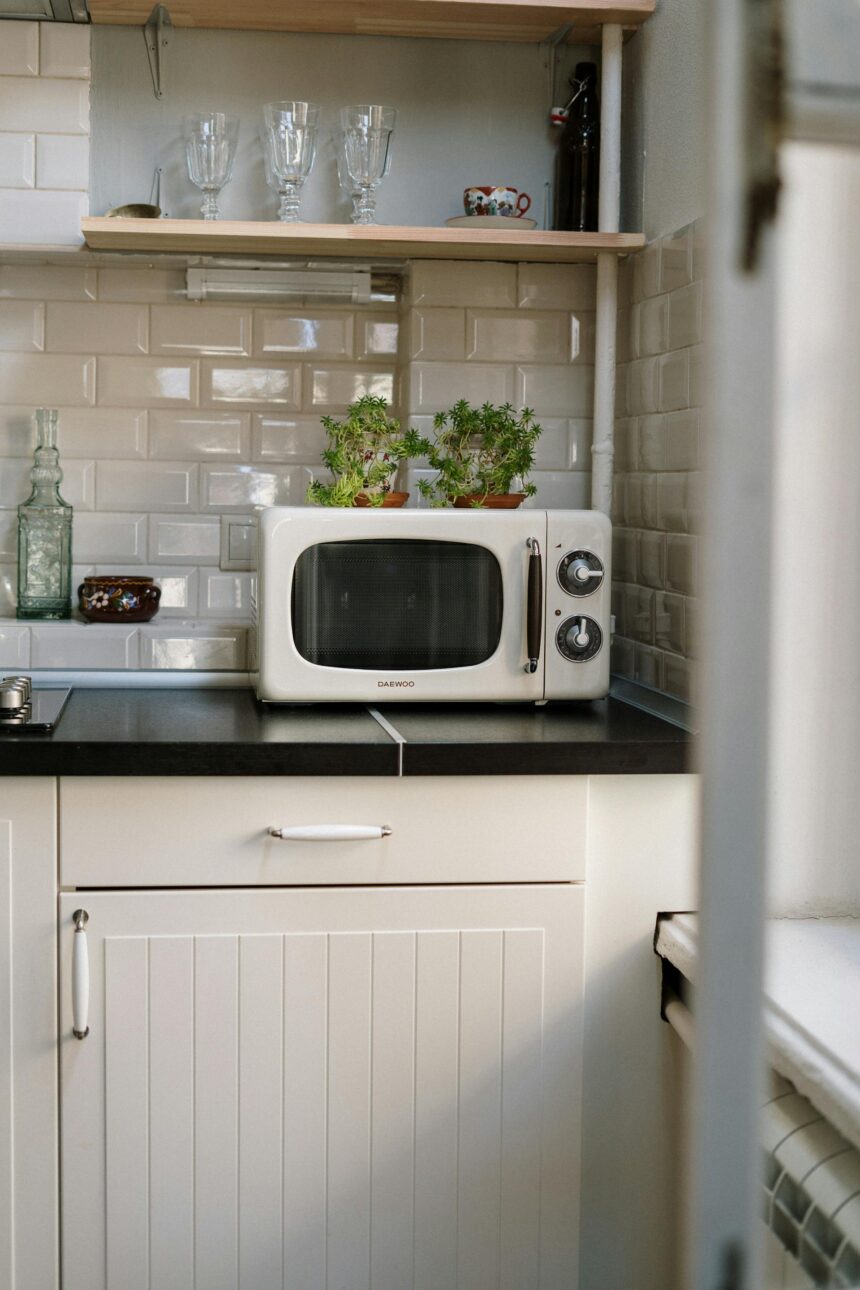
The microwave on your counter is not doing what most people think it’s doing.
Ask anyone how a microwave heats food, and you’ll get a version of the same answer: it vibrates water molecules, and that friction creates heat. Textbooks have said this for decades. Science teachers have said it. YouTube explainers repeat it every day. The problem is that it’s not wrong, exactly; it’s just so incomplete that it stops being useful, and in some cases it actively misleads.
Here’s where it gets strange. The molecule-vibration story only holds up if you never push on it. The moment you ask why a frozen dinner heats unevenly, or why a ceramic mug gets scalding while the food inside stays lukewarm, or why some dry foods heat just fine, the water-molecule explanation falls apart. If friction between vibrating water molecules explained everything, food with no water content shouldn’t heat at all. But it does.
What the Textbook Actually Left Out

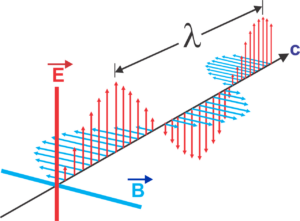
Start with what’s true. A microwave oven generates electromagnetic radiation at a specific frequency, around 2.45 gigahertz, and sends it into a sealed metal cavity. That radiation penetrates food and interacts with molecules inside it.
Water molecules are polar, meaning they have a positive end and a negative end, and they respond to oscillating electromagnetic fields by trying to realign themselves constantly. That realignment, repeated billions of times per second, does generate heat. So far, so accurate.
But water molecules are not the only polar molecules in food. Fats are polar. Sugars are polar. Salts dissolved in liquid are ions, electrically charged particles that respond even more dramatically to electromagnetic fields than water does.
The microwave isn’t hunting for water. It’s interacting with everything in the food that has any electrical character at all. Water just happens to be the most abundant of those molecules in most foods, which is why it dominates the explanation. It’s not the mechanism. It’s the most common participant in the mechanism.
That distinction matters more than it sounds.
Why Your Food Heats from the Inside Out (Sometimes)
One of the persistent myths about microwaves is that they always heat food from the inside out. This one gets repeated so often that it has the feel of an established fact. It is not.
Microwave radiation penetrates food to a depth that depends on the food’s density, water content, and composition. In many common foods, the penetration depth typically ranges from roughly one to several centimeters, depending on the food’s composition.
The outer layer of a thick piece of meat, for example, may absorb most of the radiation before it reaches the center. In that case, the interior heats primarily through conduction, the old-fashioned way heat moves through matter, from the outside in. The same process that heats a pot of water on a stove.
So microwaves heat some foods from the inside and some foods from the outside, depending entirely on what you’re cooking. The “inside out” claim was always a generalization. A useful one, maybe, for distinguishing microwaves from conventional ovens. But a generalization that hardened into myth through repetition.
Here’s the thing about that ceramic mug. It has no polar molecules, no dissolved ions, nothing the microwave can grab onto. It shouldn’t heat at all. But you’ve burned your fingers on one anyway, because the coffee inside gets hot first, and then that heat conducts straight into the ceramic. The mug is just along for the ride. That’s also why a dry ceramic dish stays cool while the food on it steams, and why a wet paper towel warms up in thirty seconds while a dry one sits there doing nothing.
The Hot Spot Problem Nobody Talks About

Uneven heating is the most common complaint about microwaves, and the standard explanation is inadequate. Most people assume it’s just a design flaw; cheap microwaves heat unevenly, better ones don’t. But the real explanation involves physics that most explainers skip entirely.
Microwaves create standing wave patterns inside the cooking cavity. These are interference patterns, places where the waves reinforce each other and places where they cancel each other out. The spots where waves reinforce create intense heating. The nulls, the dead zones where waves cancel, create almost no heating at all. This is why rotating turntables exist. They move the food through the wave pattern, averaging out the hot and cold zones over time. Without one, you get a map of the wave pattern burned directly into your leftovers.
The size of those hot and cold zones relates directly to the wavelength of the radiation. At 2.45 gigahertz, the wavelength is roughly 12 centimeters. That means hot and cold spots inside your microwave are spaced several centimeters apart, which is exactly the scale at which most people notice uneven heating. Not a coincidence. A direct consequence of physics.
The Part That Took Engineers Decades to Figure Out

Percy Spencer wasn’t trying to cook anything. He was a Raytheon engineer standing near an active radar magnetron in 1945 when he noticed the chocolate bar in his pocket had melted. Spencer was an engineer and inventor at Raytheon, and the discovery is most reliably dated to 1945, though some accounts cite 1946. That accident launched one of the stranger product development stories in American manufacturing history.
The first commercial microwave, the Raytheon Radarange, stood nearly six feet tall and cost several thousand dollars, figures commonly cited as high as $5,000 in 1947 dollars. Not exactly a kitchen appliance.
The engineering problem that followed was less glamorous: how do you get uniform heating in a sealed metal box full of standing waves? The answer took decades of refinement. Modern microwave ovens use stirrers, rotating metal fans near the magnetron, to scatter the waves before they enter the cooking cavity. Some use multiple magnetrons. Some pulse the power on and off rather than running it continuously, giving heat time to conduct through the food between bursts. The turntable is the most visible version of this solution, but it’s not the only one.
None of this complexity shows up in the “vibrating water molecules” explanation. Which is a shame, because the actual engineering story is more interesting.
Why This Matters Beyond Trivia

Knowing the real mechanism changes how you use the appliance. If penetration depth depends on density and composition, you already know why spreading food in a thinner layer heats more evenly than piling it high. If standing waves create hot and cold zones, you already know why stirring halfway through cooking isn’t just a suggestion; it’s redistributing the food through the wave pattern.
If conduction plays a role in thick foods, you already know why letting food rest for a minute after microwaving isn’t wasted time; it’s letting heat finish moving from the hotter outer regions to the cooler center.
The textbook version of microwave science is not wrong enough to matter in most kitchens. But it trained generations of people to think of the microwave as a slightly magical black box, rather than a device operating on principles they could actually understand and use.
The actual physics was always more interesting than the shortcut. Most physics is.
This article was researched, written, and edited by our human editorial team. AI tools were used in a limited research-assistant capacity. All claims were independently verified.