



In December 1982, the Environmental Protection Agency told the residents of Times Beach, Missouri, something no federal agency had ever said to an entire American town: pack your things, we’re buying you out, and don’t come back.
The population was around 2,000 people. The price tag for the federal purchase was substantial, running into the tens of millions of dollars. And the reason the government was willing to write that check rather than clean the place up and let people stay, said something uncomfortable about what happens when a cheap industrial solution meets a densely populated neighborhood and nobody notices for years.
Times Beach didn’t start as a tragedy. It started as a deal.
How a Cheap Dust Fix Became a Federal Emergency

In the early 1970s, the town had a problem common to rural roads at the time: dust. Unpaved streets, dry summers, and cars kicking up clouds that blew into homes and businesses. The solution the town contracted for was cheap and, at the time, widely used: spray waste oil on the roads to keep the dust down.
The oil came from a waste oil hauler who had been hired to dispose of industrial waste. The waste included dioxin, a byproduct of certain chemical manufacturing processes that, even in small concentrations, is toxic enough to concern toxicologists at any level of exposure. The contractor mixed the dioxin-laced oil with the road treatment oil and sprayed it across the town’s streets over multiple applications spanning several years in the early 1970s.
Nobody in Times Beach knew this at the time.
Here’s the part that makes the story hard to shake: the contamination sat there, in the roads and the soil, for years before anyone tested for it. Children played in the streets. Families walked dogs. The dust problem was solved. Life went on.
And then the Meramec River flooded in late 1982, and the floodwaters spread whatever was in the soil across a much wider area. The EPA sent investigators. The investigators found dioxin levels in the soil that exceeded federal safety thresholds. The announcement came shortly after.
The Buyout No One Had Tried Before

The federal government had cleaned up contaminated sites before. Superfund existed precisely for this: find the worst toxic sites, chase down whoever was responsible, and fix the land. But fixing assumes the land can be fixed while people stay nearby. Times Beach broke that assumption.
The contamination was under the roads. It was in the soil. The flood had spread it. The cost and the timeline for making the town genuinely safe for long-term habitation were, in the government’s assessment, worse than the cost of simply purchasing every property and relocating every resident.
So the federal government did something it had never done before at that scale: it bought a town.
Residents got payments based on what their homes were worth before the contamination. Some left fast. Some dragged their feet. A few were furious, not at the relocation checks, but at the years already spent living on poisoned ground while officials said nothing.
By the mid-1980s, Times Beach was empty.
What Happened to the Land Itself
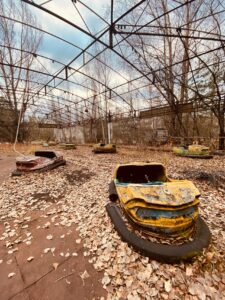
An empty town is one problem. A dioxin-contaminated empty town is another.
The structures were eventually demolished. Then came the harder job. Cleaning the soil took considerably longer than relocating the residents, and the method was blunt: an on-site incinerator burned the contaminated dirt at temperatures high enough to break dioxin down to nothing.
Neighbors weren’t thrilled. Communities near the burn site pushed back hard against federal assurances about what the smoke would carry. The EPA declared the cleanup done sometime in the mid-1990s.
What stands on the site today is Route 66, a State Park. Trails wind through what used to be residential streets. There is a visitor center in a building that survived from the town’s era. Families picnic there on weekends.
The dry wit writes itself: the most contaminated town in Missouri became a park, and the park is pleasant.
The Contractor and the Question That Lingered

The contractor responsible for the dioxin contamination was eventually identified, pursued through the courts, and held liable. Whether the financial accountability matched the scale of the harm is a question that the residents who lived through the relocation would answer differently from the lawyers who handled the settlements.
What Times Beach actually changed was specific: federal dioxin exposure standards got tighter, and the legal playbook for large-scale environmental buyouts got a new chapter. The idea that a government could simply purchase a community rather than remediate it in place had never been tested at this scale before. Now it had been.
That is not a small legacy for a town of 2,000 people that most Americans have never heard of.
The roads are still there, under the park paths. The dioxin, by every official account, is gone. Whether you find that reassuring probably depends on how long you lived on one of those streets before anyone told you what was in them.
This article was researched, written, and edited by our human editorial team. AI tools were used in a limited research-assistant capacity. All claims were independently verified.