

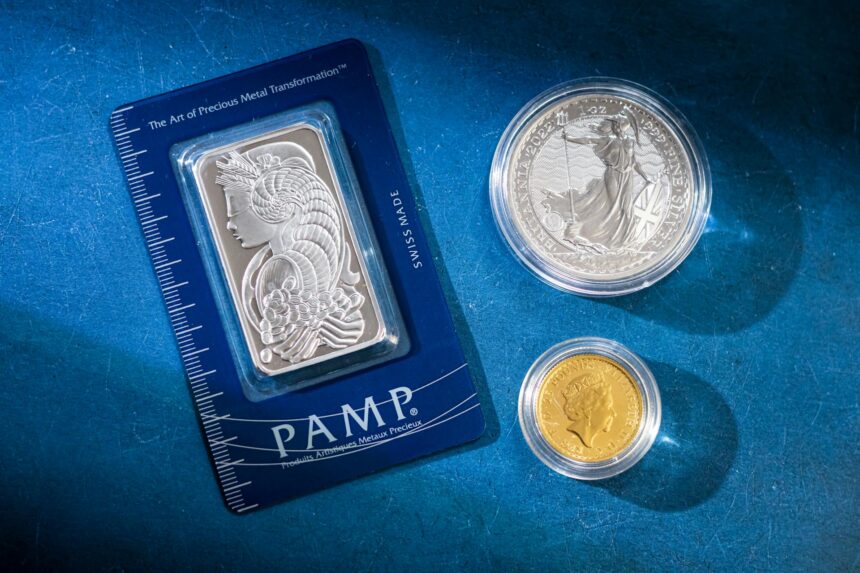
There is a specific number that sat untouched for 45 years: around $50. It was set in January 1980, during one of the stranger episodes in American financial history, and for more than four decades, it just sat there as a high-water mark no one quite reached again. In early 2026, silver didn’t just brush against that old ceiling.
It blew straight past it, closing at a new record high per ounce. The record that two Texas oil billionaires accidentally created while trying to corner a global market had finally, quietly, been broken.
Most people don’t spend much time thinking about silver. Gold gets the headlines, the jewelry commercials, the doomsday-prepper discourse. Silver tends to sit in the background, the secondary precious metal, the thing your grandmother kept polished in a cabinet. But something shifted in the last few years, and that shift is exactly why a record from 1980 no longer stands.
The Brothers Who Made the Record No One Could Break
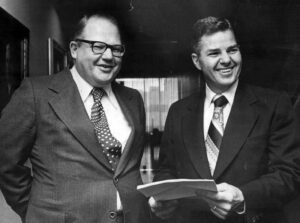
To understand what just happened, you have to go back to 1979 and 1980, when Nelson Bunker Hunt and William Herbert Hunt, sons of Texas oil tycoon H.L. Hunt, began buying silver contracts on a scale the market had never seen. They were convinced, in the way that very rich men sometimes become convinced of things, that the dollar was worthless and silver was the only real money left. So they bought. And bought. At their peak, they reportedly controlled an enormous share of the world’s above-ground silver supply. The price, which had been around $5 to $6 an ounce in early 1979, shot to nearly $50 by January 1980.
Then the government stepped in. Commodity regulators changed the rules mid-game, limiting silver purchases on margin, and the price collapsed almost as fast as it had risen. The Hunts eventually filed for bankruptcy. The silver market limped along for years afterward, carrying that $49.45 mark like a scar.
For four and a half decades, every rally in silver eventually faded before it reached that level. It became one of those numbers that traders talked about the way baseball fans talk about DiMaggio’s 56-game hitting streak. Theoretically breakable. Practically permanent.
The Reason This Time Was Different
Here’s the strange part. The rally that finally broke the record wasn’t driven by a pair of billionaires trying to corner the market. It wasn’t even primarily about fear of inflation, or the dollar falling apart, or any of the traditional reasons people flee to precious metals. It was driven, in large part, by solar panels.
By 2025, the solar industry will have become one of the largest consumers of silver, accounting for a substantial and growing share of global demand. Silver is a critical conductor in photovoltaic cells, and as solar installations accelerated worldwide, demand from manufacturers started competing with demand from investors. Then there are electric vehicles.
An average EV contains a meaningful quantity of silver, estimates vary, but typically range from around 25 to 50 grams, about double what a conventional combustion engine uses. As EV sales climbed, so did industrial silver demand, quietly and steadily, year after year.
We had spent decades thinking of silver as a monetary relic, a hedge against chaos. And it still is that. But it is also, now, a raw material in the infrastructure of the energy transition. That dual identity is new. Or rather, it is newly consequential.
A Perfect Storm With Chinese Characteristics

Onto that already-strained supply picture, add geopolitics. In recent years, China moved to constrain exports of key industrial metals,s including silver, constraining global supply at precisely the moment demand from both the green-energy sector and nervous investors was climbing. China is one of the world’s largest silver producers. When it pulled back on exports, the gap didn’t close quietly.
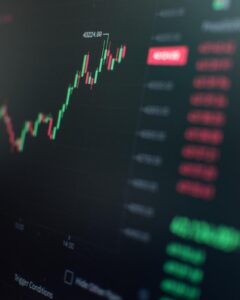
At the same time, rising geopolitical tensions sent investors back toward safe-haven assets, gold, yes, but also silver, which carries that same ancient association with stability and real value. Both forces hit the market at once: supply squeezed from above, demand surging from below. The price, which started in 2025 at around $29 an ounce, began climbing. By January 29, 2026, it had reached $121.64, a gain of roughly 279% in just over a year, according to data from APMEX and the Investing News Network.
That is not a gradual appreciation. That is the price of doing something unusual.
What a Metal Becomes When Its Story Changes
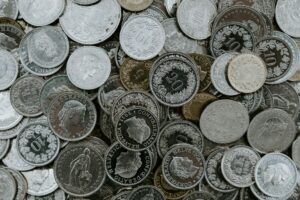
Silver has been money longer than almost any substance on earth. The ancient Greeks used it. Rome built an economy on it. Spain financed its empire with silver pulled from mines in Mexico and Peru. For most of human history, if you wanted to say something had real, lasting value, you compared it to silver. The word “salary” itself traces back to the Latin salarium, a payment made in salt, or sometimes silver.
What’s happening now is something different from all of that history, and also continuous with it. The monetary mystique hasn’t gone away. People still buy silver when they’re frightened about the future, still talk about it in terms of what it represents beyond its industrial uses. But the industrial uses have grown large enough that they now drive the market on their own. A solar installation in Arizona doesn’t care about Bretton Woods. It just needs conductive material, and silver conducts better than almost anything.
The Hunt Brothers tried to make silver valuable by hoarding it. The green energy transition is making it valuable by consuming it, slowly, steadily, panel by panel, car by car.
The Record and What It Doesn’t Resolve

That $49.45 ceiling from 1980 stood for so long that many people in the silver market had started to treat it as a kind of ceiling imposed by physics rather than circumstance. It wasn’t. It was a number made by two brothers and a commodities panic and a regulator’s rule change on a specific set of days in January 1980.
The new record, $121.64, was made by something much harder to regulate away: the structural demand of an industrial economy shifting its energy foundations. You can change margin rules on a commodities exchange. You cannot, easily, change the amount of silver it takes to make a solar cell work.
Whether silver holds anywhere near these levels, or whether another 45-year plateau is forming right now, is the question the market is arguing about in real time. What isn’t in dispute is what the last year revealed: that silver’s role in the world changed while most of us were watching gold.
The Hunt Brothers would probably find that ironic. They saw silver as the last honest money, the metal that would outlast every paper currency and every government promise. They were right about silver’s staying power. They just had the wrong reason.
This article was researched, written, and edited by our human editorial team. AI tools were used in a limited research-assistant capacity. All claims were independently verified.