



The most expensive thing on a fine-dining menu tonight might be something your grandmother scraped into the trash without a second thought. That’s not a metaphor. Across American restaurants from Nashville to Portland, dishes that mid-century families considered food for the desperate, offal, fermented vegetables, bitter greens, and whole roasted animals are now status symbols. The reversal is almost total.
Understanding how this happened isn’t just food trivia. It tells you something uncomfortable about taste, class, and who actually got to decide what counted as “good food” in postwar America. Spoiler: it wasn’t the people eating well.
Here’s the strange part: most of the foods that got rehabilitated weren’t rescued because scientists proved they were nutritious, or because chefs discovered some new cooking technique.
They were rescued because the food culture that dismissed them, the one obsessed with processed convenience, with white bread and canned everything, eventually collapsed under its own blandness. Nature abhors a vacuum. So does a hungry restaurant industry.
The Vegetables Nobody Wanted
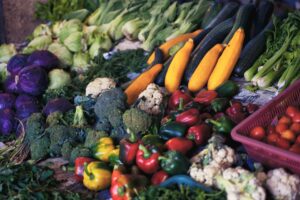
Kale is probably the most famous example of a vegetable that went from “livestock feed” to “the thing on every menu” within a single generation, but it’s not alone. Brussels sprouts spent decades as the most hated vegetable in America, the thing children were bribed or threatened into eating.
Bitter greens like arugula, radicchio, and dandelion were considered weeds or immigrant food, the kind of thing you’d find in an Italian grandmother’s garden, not on a respectable American table. Beets, which have a long and legitimate place in Central and Eastern European cooking, were relegated to the can and the relish tray.
The shift came partly through farmers’ markets and the farm-to-table movement, which gave chefs a language to describe these vegetables as “heirloom,” “foraged,” and “heritage,” turning their rusticity into a selling point. Roasted Brussels sprouts with pancetta and balsamic glaze are now a restaurant staple. Kale salad with shaved Parmesan and lemon is on menus at airports. Beet salads with goat cheese appear in places that would have served Jell-O molds in 1958. The vegetables didn’t change. The framing did.
Fermented and Funky
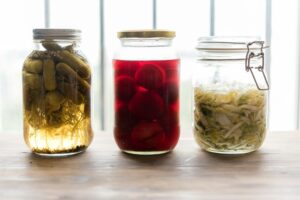
Postwar American kitchens wanted nothing to do with anything that smelled alive. Fermented foods, kimchi, naturally fermented pickles, aged funky cheeses, sauerkraut made the slow way, got pushed to ethnic grocery stores and home kitchens while the mainstream chased clean, shelf-stable, predictable. Fermentation implied decay. And decay, the thinking went, was not dinner.
Here’s the thing: gut health research gave fermented foods a scientific alibi, but that’s not actually what moved them onto menus. The real turn happened in restaurant kitchens sometime in the early 2010s, when house-made kimchi and slow-fermented sourdough stopped being quirky and started being credentials.
A jar of something bubbling on the counter meant someone had waited. Waiting meant craft. And craft, in a food culture drowning in shortcuts, meant you could charge for it. The funky stuff didn’t win because of probiotics. It won because patience became a selling point.
The Whole Animal Problem

In the 1950s, serving a whole fish with the head still on was considered alarming dinner party behavior in most of middle America. Whole roasted chickens were fine, but anything that looked too much like an animal, snout, tail, feet, or head was considered either foreign or unsettling. Pig ears, chicken feet, fish collars, lamb neck: these were poverty food or ethnic food, which in the culinary hierarchy of the era amounted to roughly the same dismissal.
Chicken feet are now on the menu at upscale dim sum restaurants that charge accordingly for the privilege. Fish collars, the fatty, rich section just behind the gills, which fishmongers used to discard or sell for almost nothing, appear at seafood restaurants as a prized special. Lamb neck braises show up on tasting menus as a showcase of technique. Pig ear salads have appeared at James Beard Award-winning restaurants.
The whole animal movement, driven partly by sustainability concerns and partly by chefs who trained in cultures where wasting any part of the animal was simply not done, turned the discard pile into the highlight reel.
The Grain Situation

White bread was aspirational in postwar America. Soft, uniform, pre-sliced white bread represented modernity, efficiency, and prosperity. Whole grains, the rough, chewy, dark-crumbed breads that immigrants brought from Europe and that poor rural families made from what they had, were associated with hardship.
Polenta was Italian peasant food. Grits were Southern poverty food. Farro was something nobody outside of Tuscany had heard of.
Walk into any upscale restaurant today, and the bread service is sourdough, the grain bowl has farro or freekeh or wheat berries, and the side dish is stone-ground grits with shrimp or braised short rib on top. Polenta appears beneath everything. The grain that middle America fled toward convenience and whiteness to escape has been reclaimed, reframed as artisanal, and marked up to match.
What This Actually Tells Us

The rehabilitation of these foods didn’t happen in a vacuum, and it wasn’t purely about flavor discovery. It followed a pattern: a food associated with poverty, immigration, or rural working-class life gets dismissed by the aspiring middle class, survives in ethnic neighborhoods and rural kitchens and immigrant households, gets “discovered” by a chef or food writer with cultural capital, gets reframed as sophisticated or sustainable or authentic, and then gets placed on a menu at a price point that the original communities who kept it alive couldn’t easily afford.
Which is the part worth sitting with? The foods didn’t change. The story around them did. And the people who never stopped eating them rarely got credit for keeping them alive in the first place.
If the most celebrated dish on tonight’s tasting menu started as something your grandparents considered too rough to serve company, it’s worth asking who decided it was rough, and who got to decide when it stopped being that way.
This article was researched, written, and edited by our human editorial team. AI tools were used in a limited research-assistant capacity. All claims were independently verified.
Sources:
12 American foods that were considered disgusting in the 1950s and are now on every upscale menu