
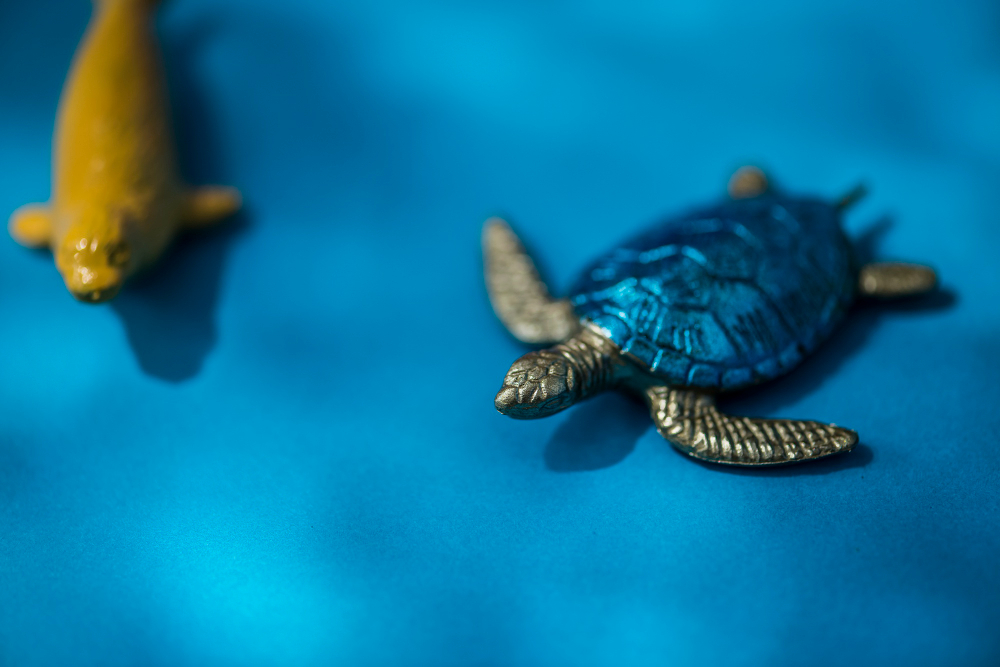
Sea turtles are among the most fascinating creatures on Earth—ancient mariners that have been gliding through the oceans for more than 100 million years. They’ve survived the age of the dinosaurs, dramatic shifts in climate, and countless natural challenges. Yet, their greatest act of survival happens not in the sea, but on sandy shores. Every nesting season, female sea turtles crawl up the beach to lay their eggs—a ritual that’s as mesmerizing as it is vital for their species’ continuation.
But one question often captures people’s curiosity: how many eggs do sea turtles lay? The answer varies by species, age, and environmental conditions—but one thing’s for sure: these reptiles are remarkably prolific nesters.
Let’s explore this topic in depth, from the number of eggs sea turtles lay to how they nest, what affects their hatching success, and how we can help protect their fragile life cycle.
The Incredible Nesting Ritual of Sea Turtles
Before diving into the numbers, it’s important to understand the nesting process. Female sea turtles return to the very beaches where they were born—a phenomenon known as natal homing. Using Earth’s magnetic field as a guide, they travel thousands of miles across oceans to reach their birthplace.
When the nesting season begins (which varies depending on the species and region), the female turtle hauls herself ashore—usually at night—to find a quiet, undisturbed spot. With her flippers, she digs a nest chamber, roughly the size of a large jug, where she’ll deposit her eggs.
After laying her clutch, she covers the nest carefully with sand to hide it from predators, then returns to the ocean, leaving her offspring to develop on their own. This process is one of nature’s great marvels, blending instinct, endurance, and hope.
So, How Many Eggs Do Sea Turtles Lay?
The number of eggs a sea turtle lays depends on its species, age, and nesting conditions. Generally, a sea turtle lays between 50 to 200 eggs per nest, and they may create multiple nests per season.
Let’s break it down by species:
1. Loggerhead Turtle (Caretta caretta)
Loggerheads are among the most widespread sea turtle species. A female loggerhead typically lays 80 to 120 eggs per nest, though some can lay up to 150. During a nesting season, she may create 3 to 6 nests, meaning she can lay anywhere between 240 to 900 eggs in a single season!
Loggerheads tend to nest every 2 to 3 years, giving their bodies time to recover and store enough energy for another nesting migration.
2. Green Sea Turtle (Chelonia mydas)
Green turtles are known for their large size and herbivorous diet as adults. They usually lay 100 to 200 eggs per clutch, with an average around 115. Like loggerheads, they nest multiple times during the season—generally 3 to 5 times—bringing their seasonal total to 300 to 1,000 eggs.
However, they don’t nest every year. Green turtles typically return to lay eggs every 2 to 4 years.
3. Leatherback Turtle (Dermochelys coriacea)
The leatherback is the largest of all sea turtles and one of the most unique. Unlike other species, its shell is soft and leathery. Leatherbacks also travel the farthest—sometimes thousands of miles between feeding and nesting sites.
These giants lay around 70 to 100 eggs per nest, but not all are viable. Leatherbacks lay about half a dozen “yolkless eggs” (smaller, infertile eggs) in each clutch. A female can nest 6 to 10 times per season, depositing up to 900 eggs in total.
4. Hawksbill Turtle (Eretmochelys imbricata)
The beautiful hawksbill turtle, famous for its patterned shell, lays 100 to 150 eggs per nest on average. They can nest 4 to 6 times in a single season, totaling up to 600 to 900 eggs. However, like other sea turtles, only a small fraction of these hatchlings survive to adulthood.
5. Olive Ridley Turtle (Lepidochelys olivacea)
The Olive Ridley is the smallest sea turtle species, but it’s a superstar when it comes to laying eggs. These turtles are known for a phenomenon called arribada—mass nesting events where thousands of females come ashore simultaneously to lay eggs.
Each Olive Ridley lays 80 to 120 eggs per nest, and may nest 2 to 3 times per season. In a single arribada, millions of eggs can be laid across one stretch of beach, a breathtaking natural spectacle.
6. Kemp’s Ridley Turtle (Lepidochelys kempii)
Kemp’s Ridley is the rarest and most endangered sea turtle species. They also engage in arribadas, though smaller in scale than Olive Ridleys. A female Kemp’s Ridley lays 90 to 110 eggs per clutch and nests 2 to 3 times per season, totaling 200 to 300 eggs on average.
7. Flatback Turtle (Natator depressus)
Native to Australia, the flatback turtle lays 50 to 60 larger eggs per nest—fewer than other species, but each egg and hatchling is bigger. They usually nest 4 times in a season, resulting in around 200 eggs per season. Interestingly, flatback hatchlings skip the open ocean stage and stay in coastal waters from the start.
How Often Do Sea Turtles Lay Eggs?
Most sea turtles don’t nest every year. Depending on the species, they return to nesting beaches every 2 to 4 years. Between nesting seasons, females spend time feeding and restoring their energy reserves.
Within a single season, a female can nest every 10 to 15 days, creating multiple nests to spread out the risk of predation or environmental damage. This ensures that even if one nest is lost, others may still hatch successfully.
Temperature Determines Gender
Here’s a fascinating fact: the temperature of the sand where sea turtles lay their eggs determines the hatchlings’ sex. This phenomenon is known as temperature-dependent sex determination (TSD).
- Warmer sand (above ~30°C / 86°F) produces more females.
- Cooler sand (below ~29°C / 84°F) produces more males.
Climate change is beginning to skew these ratios in some regions, creating predominantly female populations—a potential threat to future reproduction.
Hatching: The Race for Survival
After about 45 to 70 days (depending on temperature and species), the eggs hatch. The tiny turtles emerge at night, instinctively racing toward the brightest horizon—the ocean. This journey is perilous: crabs, birds, and other predators often pick off hatchlings before they reach the water.
Out of 1,000 eggs, only 1 or 2 hatchlings may survive to adulthood. This low survival rate is why female sea turtles lay so many eggs—to ensure that at least a few of their offspring live to continue the cycle.
Threats to Sea Turtle Nesting
Sea turtles face numerous threats that affect their nesting success and overall population:
- Habitat destruction: Coastal development and beach erosion reduce available nesting sites.
- Light pollution: Artificial lighting confuses hatchlings, leading them away from the ocean.
- Predation: Raccoons, crabs, birds, and even feral dogs dig up nests for eggs.
- Climate change: Rising temperatures and sea levels alter nesting patterns and affect hatchling survival.
- Poaching: In some regions, turtle eggs are still illegally harvested for food or trade.
Conservation Efforts: Protecting Sea Turtle Nests
Many conservation organizations around the world are working tirelessly to protect sea turtles and their nests. Efforts include:
- Establishing protected nesting beaches
- Running hatchery programs to safely incubate eggs
- Reducing artificial lights near nesting areas
- Community education programs to discourage egg poaching
- Tagging and tracking turtles to study migration and reproduction
Public awareness and eco-tourism also play a big role. In places like Costa Rica, Florida, and Australia, tourists can join guided turtle-watching programs that support conservation while educating visitors about these incredible creatures.
Final Thoughts: A Symbol of Strength and Survival
So, how many eggs do sea turtles lay? Depending on the species, a single female can lay anywhere from 50 to over 200 eggs per nest, and hundreds or even thousands per season. But despite these high numbers, only a handful of hatchlings make it to adulthood.
Sea turtles remind us of nature’s delicate balance—how abundance in one stage compensates for fragility in another. Their nesting ritual connects past and present, sea and shore, life and survival. Protecting these ancient mariners ensures that future generations can continue to witness one of the most awe-inspiring natural spectacles on Earth.
