
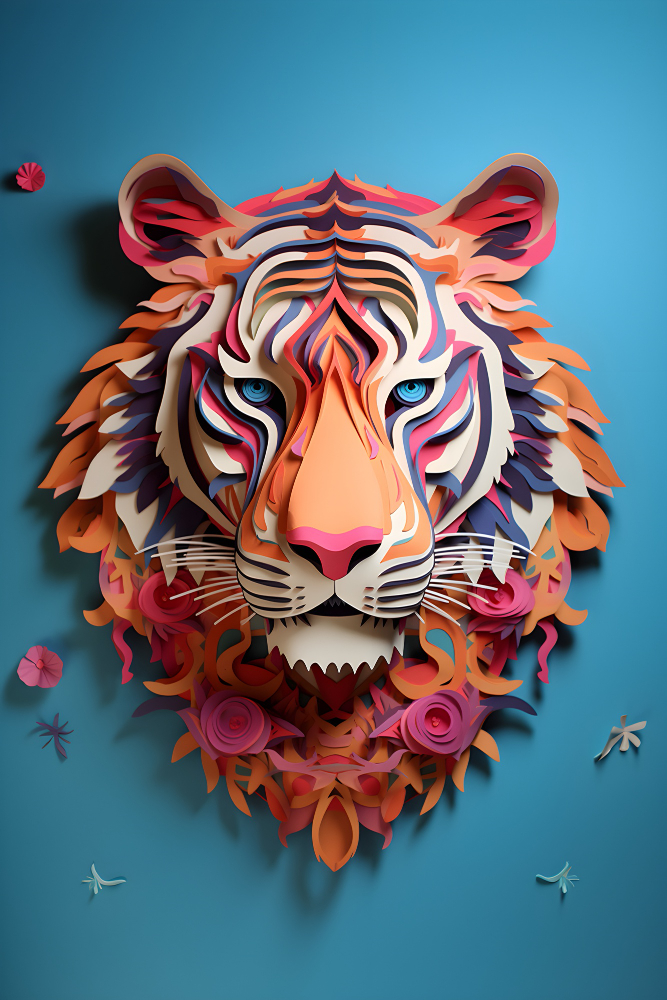
Origami, the traditional Japanese art of paper folding, has fascinated artists, hobbyists, and thinkers for centuries. Each fold carries meaning, precision, and creativity. Among the many origami creations, one of the most powerful and captivating figures is the origami tiger — a symbol of courage, energy, and balance.
In this post, we will explore the fascinating world of the origami tiger — from its symbolism and cultural roots to the techniques used to bring this majestic animal to life through paper. Whether you are a beginner curious about this intricate fold or an expert looking for new inspiration, this guide will walk you through everything you need to know about crafting and understanding the origami tiger.
The Symbolism Behind the Origami Tiger
In many Asian cultures, the tiger represents power, bravery, and protection. It is considered the king of all wild animals — commanding respect and fear in equal measure. In Chinese mythology, the tiger is one of the four celestial guardians and symbolizes the West, autumn, and the element of metal. Similarly, in Japanese culture, the tiger embodies courage and the fighting spirit, often seen in ancient art and samurai symbolism.
When represented in origami form, the tiger’s ferocity is softened yet preserved — its folded lines and sharp edges capture both the animal’s elegance and intensity. Folding a tiger out of paper is not merely an act of creativity; it’s also a symbolic meditation on control, patience, and balance — traits that the tiger itself embodies.
The Origins of Origami and the Rise of Animal Models
Before diving deep into the tiger design, it’s essential to understand where origami began. The word origami comes from two Japanese words: ori (folding) and kami (paper). The art form traces its roots back to ancient Japan, although similar paper-folding traditions appeared in China and other cultures.
In the early stages, origami was used for ceremonial purposes — for instance, folded paper butterflies (orizuru) were used in Shinto weddings to symbolize marital happiness. Over time, origami evolved from a spiritual art into a creative pursuit accessible to everyone.
By the 20th century, origami artists like Akira Yoshizawa revolutionized the craft by developing modern folding techniques and notation systems. Yoshizawa’s influence helped introduce complex animal models — including lions, elephants, and eventually tigers — that combined mathematical precision with lifelike artistry.
Designing the Origami Tiger: A Challenge of Geometry and Art
Creating an origami tiger is both an artistic and technical challenge. The tiger’s shape requires careful attention to proportion — its body must appear muscular, its legs balanced, and its head fierce yet elegant. Unlike simpler models such as cranes or frogs, the tiger’s design involves numerous intricate folds, layers, and angles.
1. Choosing the Paper
The first step is selecting the right paper. For beginners, kami paper (traditional origami paper) works well — it’s thin yet strong enough to handle multiple folds. For more advanced artists, washi paper or foil-backed paper is preferred. These allow for sharper creases and greater durability when working on complex models like the tiger.
Tip: A larger square (at least 25 cm x 25 cm) is recommended for detailed folds. Tigers often require more steps, so you’ll want enough space to maneuver comfortably.
2. Understanding the Base
Every origami model starts from a base form — the most common ones include the bird base, fish base, and frog base. The origami tiger typically begins with a modified box base or preliminary base, which provides symmetry and structure for forming the body, head, and tail.
3. Folding the Head and Body
The head is the most expressive part of the origami tiger. Through careful creasing, you can shape pointed ears, a snout, and even facial contours. Many advanced folders also use shaping techniques, where they slightly curve or round certain folds to give the illusion of muscle and dimension.
The body requires reverse folds and squash folds to create legs that can support the model. The tail, often crafted from the remaining paper flap, adds movement and personality — some artists even curl it to suggest a tiger’s alert stance.
Step-by-Step Overview (Simplified)
While a full diagram would be needed for a detailed tutorial, here’s a general overview of how a basic origami tiger is constructed:
- Start with a square sheet of orange paper (white side down if two-colored).
- Fold diagonally both ways to form an “X” crease.
- Fold horizontally and vertically to make a “+” crease.
- Collapse into a preliminary base by bringing the corners together.
- Shape the head by folding down the top triangle and forming small ear flaps.
- Form the legs by pulling out the lower layers and folding them downward.
- Define the body through reverse folds that create chest depth.
- Fold and shape the tail, making sure it balances the back.
- Add details — small pleats for stripes or curves for muscle definition.
- Finish by adjusting proportions to give the tiger a proud, natural stance.
This simplified structure can be modified endlessly. Expert origami artists often integrate color changes (using paper with two sides of different colors) to represent the tiger’s iconic orange fur and white belly.
The Role of the Origami Tiger in Modern Culture
In modern times, the origami tiger has transcended its craft origins to become a symbol of empowerment and creativity. It’s often used in educational settings to teach patience, focus, and spatial reasoning. Folding a tiger can be a mindfulness exercise — a way to engage both the logical and creative sides of the brain.
Additionally, artists and digital creators have adapted the origami tiger into 3D design, animation, and logo art. The geometric elegance of folded paper has inspired minimalist tiger motifs in branding, tattoo art, and even architecture.
On social media platforms like YouTube and Instagram, origami enthusiasts share tiger tutorials and time-lapse videos, turning traditional craftsmanship into viral digital art. Each shared fold keeps the ancient art of origami alive while making it accessible to a new generation.
Famous Origami Tiger Designers
A few renowned origami artists have contributed remarkable tiger designs that showcase both technical mastery and artistic flair:
- Satoshi Kamiya – Known for his incredibly complex and lifelike origami animals, his tiger design features over 100 intricate folds and near-anatomical accuracy.
- Hideo Komatsu – His minimalist tiger balances simplicity and realism, making it achievable for intermediate folders.
- Katsuta Kyohei – Developed models that emphasize the tiger’s dynamic posture, often mid-stride or crouched as if ready to pounce.
These artists demonstrate how origami is both art and engineering, each fold representing a decision in structure, expression, and emotion.
The Psychological and Educational Benefits of Folding an Origami Tiger
Beyond aesthetics, folding an origami tiger has several psychological and cognitive benefits:
- Improves Focus and Patience:
Each fold demands precision and care, encouraging mindfulness and calmness. - Enhances Spatial Reasoning:
Understanding how a flat sheet transforms into a 3D model improves problem-solving and visualization skills. - Encourages Perseverance:
Tigers are not beginner-level creations. Completing one builds confidence and resilience. - Promotes Relaxation:
The repetitive, rhythmic nature of folding can reduce stress and serve as a meditative practice. - Boosts Creativity:
Experimenting with color, pattern, and pose allows for artistic self-expression.
Origami Tiger in Festivals and Exhibitions
During events like OrigamiUSA conventions or Japanese cultural festivals, the origami tiger often appears as a centerpiece due to its visual impact. It represents both the spirit of craftsmanship and courage — fitting qualities for a creature that embodies majesty and strength.
In 2022, which was the Year of the Tiger in the Chinese zodiac, origami artists worldwide created thousands of tiger models to celebrate. Museums and galleries displayed intricate paper tigers as tributes to resilience and artistic innovation.
Conclusion: Folding the Spirit of the Tiger
The origami tiger stands as a perfect fusion of nature, geometry, and imagination. With each fold, artists bring to life an animal that symbolizes bravery, power, and independence — qualities that resonate deeply in the human spirit.
